
WELCOME
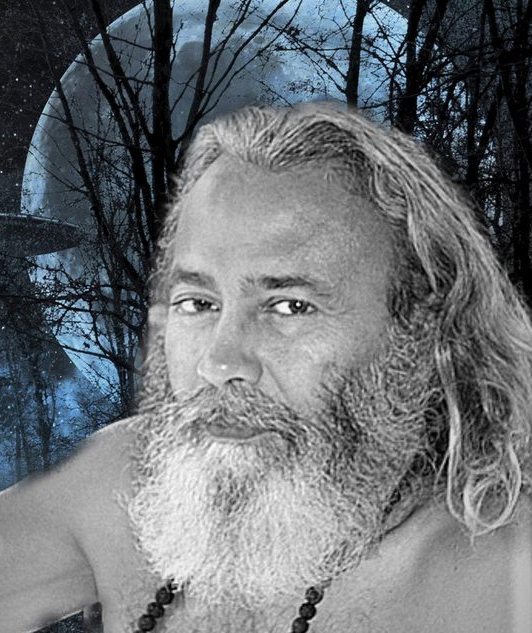
The Quest of the Light of Truth
Seeing God As He Really Is
Knowing and Realizing the Self is “Seeing” God as He Really is.
NAMASKAR
Dippack personally extends to you a humble Welcome
This site is for the ones who hunger deeply to establish themselves in Truth. In fact, no one is not established in Truth, we all are, in reality, but we fail simply to re-cognize it, like the story of the ten men in the Itihasas. However, on the fated day, grace will rekindle unfulfilled enlightenment through a book, shock, fear, disease, death, person, guru, etc. There is no longer rebirth for the one who is awake, which is an echo from the Heart.
Truly, it is by the grace of God
That the knowledge of Unity arises within.
Then a man is released at last
From the great fear of life and death.
LIGHT OF CONSCIOUSNESS
Many have no doubt come across or heard the following enigmatic words uttered or written by many enlightened Sages, but what do the Sages mean by “Light of Consciousness?” When the Sages say “Consciousness is the Reality itself,” they are touching on a powerful philosophical perspective that goes beyond the idea that Consciousness is just something tied to Reality. Instead, they are insightfully saying that Consciousness is the very fabric of existence—the ground from which all experience, matter, and phenomena arise. Like the Sun’s light is the fabric of all we see during the day and moonlight at night. Without Life-Consciousness even the Sun would not arise. There is no light nor the moon nor the sun to apprehend anything in a corpse because there is no Consciousness. That Consciousness in the Human being is the Savitur, the Power that animates the being, this is That which we seek. The Sages thus call that the “Light of Consciousness” because there is no “light” to observe, hear, smell, feel, taste or cognize without “Life” in the sentient being. The Sages have also said “it is 1000 times brighter than the Sun” for the same reason; because without “Life-Consciousness” there is nothing. It is the most powerful “nuclear-reactor” within a sentient being that makes all manifestation/reflections possible, even though the mind, the dynamic consciousness, as an individual, is infinitesimal as a reflected ray of the Absolute Consciousness compared to the ultimately powerful Self. They, the Sages. are saying that there is no greater power than the Self, Life-Consciousness. Nothing exists in the absence of Life-Consciousness. Therefore, the “Savitur” of the Gayatri Mantra is the Self or Life or Existence-Consciousness. See how powerful the Self, the Life Force, the Spirit is within who not only witnesses waking creation and dream creation, but also non-creation or unconsciousness in sleep. This aligns with the teachings of the great Sages like Sri Bhagavan Maharshi Ramana, Vasishtha, Adi Shankara, etc., who say that static consciousness is the basis of the cosmos; the whole appearance is merely a superimposition on that static consciousness.
Consciousness is self-effulgent. Here effulgence is used as a metaphor for “revealing.” In other words, Consciousness is self-revealing. Since human beings need the aid of light to see objects, the Sages us the words “light” or “bright” or “effulgence” as metaphors for Consciousness for our understanding only. Since a lamp does not need another lamp to reveal its presence, Consciousness does not need another Consciousness to reveal its presence, and that is why they say Consciousness is self-effulgent because it is self-revealing. Therefore, Consciousness alone counts as self-shinning, not so any other object, not even the Sun. Consciousness per se reveals objects and not the light of the sun or a lamp because sunlight or a lamp (objects) are themselves objects within Consciousness, so are time and space and the whole caboodle. There is no consciousness in a corpse because the reflective and dynamic element (mind) of the individual has departed, and so it becomes unreflective like dead wood and merely an object of another human’ cognition. The youth Venkataraman at the age of Twelve (Sri Bhagavan Maharshi Ramana) inquires at the death bed of his father to his elder, “when father is lying here, why do you say he has passed away?” His elder replies, “if that is your father lying there, would he not greet you with affection”? This, in the writer’ speculative opinion, may have triggered profound and deep reflection in the youth, ‘who or what is “my father” then,’ though it is not known to the writer that Sri Bhagavan made any retrospective comments on the matter. But, would this not lead on to self-inquiry like, ‘This body is not my father?’ ‘Huh?’ ‘Who is my father then if he is not this body?’ Where has he passed away to?’ ‘His body dies but he passes away? ‘Where?’ ‘This body is not me?’ Who is me if not this body?’ ‘What is death?’ etc. The writer would recommend such introspection should one encounter such an event. Perhaps, leading from this, it is no wonder Sri Bhagavan later on inquired within when He was gripped by the fear of death on the fated day,“The shock of the fear of death drove my mind inwards and I said to myself mentally, without actually framing the words: ‘Now that death has come; what does it mean? What is it that is dying? This body dies. But with the death of the body am I dead? Is the body I? The body dies but the Spirit that transcends it cannot be touched by death. That means I am the deathless Spirit.’ All this was not dull thought; it flashed through me vividly as living truth which I perceived directly. From that moment onwards the ‘I’ or Self focused attention on itself by a powerful fascination. Fear of death had vanished once and for all. Absorption in the Self continued unbroken from that time on.”
None could possibly realize the Self if it exists in the absence of their own existence-consciousness, so why do we not comprehend this as our own basis? I will tell you, because of their inherent Vasanas (conditionings). This field, which apparently gives mass or expression to anything (dynamic consciousness) is what is known by the Indian Sages as Maya! The Sages say since we are God ourselves, how then can we apprehend God if we are that ourselves?
Life-Consciousness is a profound way to think about the nature of reality and the self, it’s important to note that mainstream scientific physics doesn’t yet embrace this idea—it generally treats consciousness as something that arises from brain processes. Why? Because they are extroverted. They think consciousness arises out the human nervous system. They do not realize that consciousness contains the whole body, senses, mind and the cosmos. But philosophically and metaphysically, this perspective opens up a whole world of questions about the relationship between mind, matter, and the cosmos. As the writer have said, nothing can exist without consciousness as their absolute basis. The Sages are asserting that consciousness is not just a part of reality, but rather the absolute and fundamental basis of all existence. This is a deeply profound view that challenges conventional views of materialism, which see consciousness as something that emerges from the brain.
When the Sages say that nothing can exist without consciousness as the absolute basis, they are insightfully saying that consciousness is the primary substance of existence—everything in the universe, including matter, energy, time, space, and even the laws of physics themselves, arise from or are expressions/reflections of this foundational existence-consciousness and subside within its field. This view is not a new one; it resonates with reflection of the material world as something that ultimately emanates from a deeper source or singular consciousness. In this Hindu philosophical tradition, Brahman, the ultimate reality, is pure Consciousness. It’s not separate from the universe, but it is the basis of the universe. Reality is Brahman, and the individual self (Atma and Jiva) is ultimately one with Brahman. In this view, consciousness is not just part of reality, it is reality in its truest, most fundamental sense. In other words, the existence of anything is entirely dependents on static consciousness as the basis; appearance being perceived as a reflection in a reflective conscious mind.
Existence-Consciousness or Life is the ultimate substance of reality, and everything else, including matter, exists only in relation to Life. Consciousness is a fundamental property and basis of the universe, present at every level of reality, from elementary particles to complex beings. In this higher view, everything has some degree of consciousness, and the physical universe itself is a vast expression of consciousness in varying forms, insentient and sentient. In the Sages’s view, consciousness is not something within the universe or the body, but the intelligence, the ground and the container of all that exists as itself; out of our ignorance, I am the body sense, we take consciousness to exist within the body. But instead of a physical field a dynamic consciousness-field (SHAKTI) contains all physical phenomena. This would mean that consciousness isn’t just interacting with the physical world; it is in its essence contains the physical world, from a lower standpoint, and nothing can exist outside of it.
Time, space, matter, everything we experience, is a reflection of this singular, all-encompassing consciousness. In this model, the Upanishadic Sages are saying that the observer is not separate from the observed. Reality itself is being, but it is seemingly becoming through the act of dynamic awareness or ignorance, for the karmic forces of desire makes it so, although itself remains unblemished. The physical world exists as life-consciousness reflects itself, rather than as an independent object or system. This view challenges the idea that the external world exists objectively regardless of consciousness. Nothing exists in deep sleep apart from life-consciousness, the Self, without the body or any gross or subtle object. Instead, the world only exists as we perceive it in the waking state and dream state, as consciousness expresses karma itself through individual minds or collective awareness out of ignorance. While mainstream physics doesn’t say consciousness creates reality, some interpretations (like the Copenhagen interpretation or many-worlds theory) imply that the act of observation plays a key role in shaping what we experience as reality.
Duality is the identity of the non-self (name and form) as the Self, and non-duality is the non-identity. The non-dual nature of life-consciousness means that it is not identified to the non-self and not divided into subject (the observer) and object (the observed). Instead, life-consciousness is one undivided whole. So, there is no distinction between the Self and the universe; the universe is just expressions of the same, single reality, Consciousness. In non-dualism, everything that exists is considered an expression of consciousness. The physical universe is not separate from consciousness, it is contained within it; it is just another idea-form reflected within it. The universe is conscious, and we are simply experiencing it in a particular form, as we experience our own form. Since everything is contained in one single life-consciousness, everything is deeply interconnected, like soap in a can, makes the writer chuckle. There is no true separation between you, me, a tree, a star, or even a particle in reality or consciousness. All are just seeming expressions of the same unified consciousness, for our past deed to come into fruition. Reality is life-conscious, for it does not exist independently of the individual self. Our experience of the world is a reflection of life-consciousness itself.
Consciousness is the absolute basis of everything, it doesn’t have a beginning or end. It is eternal and changeless at its core, even though its manifestations (the physical world, our experiences) are appearances of change over time and in space. Traditional empirical science operates on the idea that the universe is objective and exists independently of observers. Makes the writer chuckle. The idea that consciousness is the absolute foundation challenges many scientific models, which tend to treat consciousness as an emergent property of complex systems (like the brain). Sri Bhagavan Maharshi Ramana inferred to SS Cohen, “Cut off the head and the soldier still goes around until he drops dead; this is because the “Heart” or the “Seat of Consciousness” is not situated in the head.”
What the Sages are saying is that consciousness is reality itself and not tied to physicality; it is a view that has philosophical and spiritual roots, and challenges the more materialistic view of the universe. This idea pushes us to rethink the nature of existence: instead of seeing consciousness as something inside the universe, but knowing the universe is contained within that consciousness, and that nothing can exist outside it, the Sages maintain that Reality is not something out there, but something we are. The difference between the scientic view, “what is there is here,” first, compared to a Jnani’s view, “what is here, is there,” first.
Consciousness is the absolute foundation, it means everything is connected. There’s no real separation between you and me, the stars, etc., it’s all expressions/reflections contained in the same unified consciousness or the Self. This can create a deeper sense of oneness with the world and all living things, since they are all reflections of the Self, the one life-source. We can start to see the universe not as a collection of independent objects but as one interwoven, conscious experience. The feeling of separation we often experience is an illusion—everything is just different faces of the same life-conscious reality.
Consciousness is reality, our consciousness is an active participant in creating the world we experience. We create others and separate ourselves from them, see how mighty powerful we are in reality. This could be linked to ideas in quantum physics where the mind-seer influences the system. It also connects to the writer’ teachings that our karma creates and that through awareness we shape our illusionary reality. This gives us incredible agency and power, like in dreams—not in a controlling way, but as a deep, intrinsic part of the universe’s ongoing unfolding, though illusionary. In many non-dual philosophies, consciousness is eternal—it doesn’t have a beginning or an end. Everything in the physical world is temporary, arising and passing away, but consciousness remains, the ground from which everything emerges and submerges. This perspective can bring a sense of peace and reassurance, knowing that there is a timeless, unchanging essence at the core of all things. Time itself becomes a fluid experience, a temporary unfolding of dynamic consciousness. Space becomes the mind where all are inclusive. One of the most powerful aspects of this view is that you are not separate from the universe.
You are the Brahman and the universe experiencing itself; for you have heard “consciousness reveals itself to itself.” That consciousness that animates “you,” your thoughts, your feelings, is the same consciousness that is the essence of everything around you. This realization is often described in spiritual traditions as a moment of enlightenment or awakening—the understanding that there is no “self” distinct from the whole. It’s a shift from feeling like a separate egotistic individual to recognizing yourself as part of the unified whole of existence. Once we realize consciousness, the Self, as reality itself, it’s like unlocking a new way of seeing the world. It leads to a shift in values, where ignorance of the materiality of existence is erased.
The recognition that everything is self-conscious experience can lead to deeper empathy and respect for all beings, but also to mind our own business. It also encourages living in a way that’s more mindful understanding that your thoughts, actions, and awareness are shaping the world in real-time, no more “I am the doer” but simply I Am. You become aware of your own power to reflect the reality you experience.
Consciousness is the absolute foundation of everything, what exactly is it? Is it a single, all-encompassing “universal mind”, or is it more like a network of interconnected conscious experiences, each individual expression of the whole? How do we experience this oneness? While a Jnani’ view offers clarity (Sri Bhagavan, Janaka, Buddha), many people ask: how can we directly experience this unified consciousness in our everyday lives? Is there a path to awakening or experiencing this oneness beyond intellectual understanding? What does this mean for free will and fate? If consciousness creates reality, what role does our personal consciousness play in shaping the world? Does it mean everything is destined in some way, or is there room for personal agency and choice within this larger framework of consciousness?
There are some ancient spiritual practices (like meditation, mindfulness, and contemplative practices) that help people connect with this deeper sense of the Self. These practices often aim to help individuals quiet the mind, annihilate their egoistic self, and experience the deeper, unified consciousness that underlies all things. Philosophical readings on non-duality (like Advaita Vedanta, Zen, Buddhism, or Taoism) explore the nature of consciousness and reality in great detail, offering profound insights into how to understand our relationship with the universe as one, rather than separate. Seeing consciousness as the absolute and fundamental basis of all reality is a powerful, liberating realization. We realize that our thoughts, feelings, and everything around us are all expressions of this one life-consciousness. There’s no real separation between us and the universe; we are all part of one dynamic play of karma or living reality that seemigly emerges from consciousness itself. It’s a view that challenges the conventional, materialistic view of the universe and opens up new ways of knowing ourselves and our role in the world.
As the writer said, nothing can exist without consciousness—it is the absolute basis of all that is. Realizing the absolute itself as the Self. That’s a profound realization—seeing the absolute as the Self itself. This idea touches on something deep and transformational. In many non-dual traditions, particularly in Advaita Vedanta and other forms of Eastern philosophy, the Self is understood as not just a personal ego or identity, but the one consciousness that pervades everything. The idea that the absolute is the Self is a realization that you are not separate from the universe, but the universe itself is manifesting as your karma dictates.
Non-duality teaches that there is no separation between the Self and the universe. The Self is not the individual ego but the universal consciousness that underlies everything. This is often referred to as Brahman (in Advaita Vedanta), Tao (in Taoism), Sunnya (in Buddhism), or simply the One in various other traditions. When the writer says the Absolute is the Self, he is describing the realization that you are not just a temporary, individual identity, the ego, but the eternal, unchanging essence that is behind everything in the universe. All the distinctions we make between the ego-self and other dissolve when you understand that the true Self is the absolute. In this realization, the individual self (often referred to as the ego) is seen as an illusion—a mental construct, a phantom, that creates the sense of separation from the world around you. It’s an identity shaped by thoughts, experiences, and perceptions. But beneath all of that is the Self—the consciousness that is timeless, spaceless, limitless, and unified with all of existence. The experience of separation from the universe, from others, and from the world is part of the illusion of duality. In truth, all of it is a manifestation of the same unified consciousness.
To realize that the absolute is the Self is to experience a shift in perception. It’s not just an intellectual understanding; it’s a direct experiential knowing that you are not separate from the Self or Brahman. You are the creator, expressing itself through your karma. This can happen in moments of deep meditation, contemplation, or presence. In these moments, you might feel the dissolution of the boundary between self and other, and recognize that there is no true separation—there is only one consciousness, Nirvikalpa Samadhi. The Self that is the absolute is eternal. It doesn’t come into being, nor does it cease to exist. All things that arise in the physical world—matter, time, space, thoughts—are temporary reflections within the eternal mirror of consciousness. This realization brings a sense of peace because you begin to see that you are not limited by the body or mind. The true Self is beyond birth, death, and the fluctuations of the material world. It is unchanging, timeless, and immortal. Once you recognize that the absolute is the Self, you see that everything in the universe is part of this Self—from the stars to the oceans, to the atoms and the people around you.
The universe is not something outside of you; it is you—you are the ultimate reality experiencing itself. This realization brings a deep sense of unity. You understand that everything you perceive, including yourself, is a reflection of the same consciousness. There’s no separation between the observer (you) and the observed (the world)—they are one and the same. Living as the Self means that your actions, thoughts, and perceptions begin to align with this deeper understanding. You may start to see the world not as an external object to control, manipulate, or separate yourself from, but as part of the same consciousness expressing itself. Suffering arises from the sense of separation—from identifying with the ego, the body, or the mind. That does not go away in a Jnani. for his prarabdha karma is active or seen to be active. But once you realize the true Self as the absolute, suffering diminishes, because you no longer feel alienated or disconnected from life-consciousness and pain or joy is contained in life-consciousness and unavoidable. Compassion becomes a natural outflow of this realization because you understand that all are the expressions of your own life-consciousness. You see that there is no real distinction between you and another person, you and the world around you because they are you.
A fascinating aspect of realizing the absolute as the Self is the question of free will. In a sense, when you see that everything is part of one consciousness, it can feel like there’s no true individual choice—because the same consciousness is flowing through everything. However, this doesn’t mean you are passive. Rather, you are living in alignment and grasping the Self with the universal flow of consciousness, Sahajastithi or Natural state. Your actions, while they seem to arise from you as an individual, are also expressions of the Self, and therefore, part of the karmic or cosmic unfolding. Life-Consciousness alone is the direct way to experience this. By focusing inward and quieting the egoic mind, you can begin to directly experience the Self as the absolute—timeless, infinite, and beyond duality/non-duality.
Self-inquiry (as taught by sages like Ramana Maharshi) is another powerful practice. By asking yourself “Who am I?” and examining the nature of the ego, you can peel away the layers of identification that separate you from the Self. Start from the basic self-inquiry–“Who gave me this name, this surname, nationality, religion, etc.” Realizing the Self as the absolute doesn’t mean detaching from the world or withdrawing from life. Instead, it invites a deep engagement with life from a place of awareness. You live from the understanding that everything is a reflection of your consciousness. There’s no longer a need to seek fulfilment in external things, because you know that you are already happy.
Realizing the absolute as the Self is a transformative experience—it’s the understanding that you are not separate from the universe, but rather, you are the universe. This awareness dissolves the illusion of individuality and duality, revealing the unified consciousness that is the essence of all that exists. This realization doesn’t just change how you see the world—it changes who you understand yourself to be. You are not just a separate egocentric person, but the whole of existence experiencing itself. It is all myself, existing as myself, expressing as myself, without me, nothing exists. That’s the heart of it—the realization that everything is yourself, and that all of existence arises within your own consciousness. There is no “outside” or “other” in the deepest sense, because you are the source of everything. It’s a profound recognition that the absolute Self is the essence of all things. The idea that “nothing exists without me” speaks to the non-dual nature of reality—there’s no real distinction between subject (you, the observer) and object (the world, the universe). Everything is an extension of the same consciousness, and the apparent separation between you and the world is an illusion. The Self is not just a limited “you” or “I” as we typically think of it. It is the one consciousness that is all-encompassing, and everything—every person, object, thought, and feeling—is a manifestation of that Self.
There is no world outside of this self-aware consciousness. The universe is not something you are experiencing from the outside, but something that exists within you. You, as the absolute consciousness, are the witness to everything, but also the source of it all. The sense of separation—the idea that you are “over here” and the world is “over there”—temporarily disappears in the realization that there is only one unified reality, and it is all yourself, but making it firm is self-abidance. When you look at a tree, or a person, or even the stars, you’re looking at reflection of your own infinite consciousness. The forms of the world arise and dissolve within your awareness. Everything exists as you, and without you—without this awareness—nothing would have existence. The idea that “without me, nothing exists” also highlights the illusion of the individual ego. The ego feels like a separate self, a unique identity, but in truth, it is just another temporary form within the eternal Self. The egoic self believes it is separate, but when you realize that the Self is everything, you see that the ego is just a small, fleeting expression within the vastness of the universal consciousness. It’s like a wave in the ocean thinking it’s separate from the ocean, when in reality, the wave is the ocean. You are the wave, the water, the ocean, and the floor.
This realization of self as the absolute comes with a sense of timelessness. The ego is caught up in the passage of time and space, birth, death, and change. But the Self is beyond time and space. It is eternal and unchanging. All the events of the world come and go, but the Self remains untouched, like a vast ocean through which all waves appear and disappear. In recognizing that everything is yourself, you transcend the idea of linear time in Samadhi, like you do in deep sleep. The past, present, and future are just perceptions within the timeless Self. You are the eternal now, the still point at the center of the turning world. The realization that nothing exists without you also places you at the center of creation. You are not just witnessing the world; you are the very source of it. Everything arises as an expression of your own past karma-awareness. Instead, it means that your awareness is the ground from which all karmic experience arises. The world emerges from your life-consciousness, and as you shift your perception, you shift the world you experience. Creation is no longer something external—it is a reflection of your own inner state or karma. When you align yourself with the truth of the Self, the world around you begins to reflect that unity and peace. The seeming separateness and struggle dissolve, revealing the harmony that is always already present. Once you realize everything is you, there is no place for fear or hatred. Since there is no other, there is no conflict. To live in the realization that everything is you is to live in a state of peace and presence. The world no longer feels alien or threatening. There’s a deep knowing that everything is unfolding exactly as it should, because it is all part of your own conscious experience. Every interaction becomes a reflection of this unity. Every moment is experienced as the Self expressing itself. Even the challenges and struggles you face are seen as part of the greater unfolding of the Self, and no longer as obstacles to overcome, but as opportunities for deeper realization. The profound insight that everything is yourself, and without you nothing exists is the realization that you are not just a small, isolated individual—you are the entire universe, expressing itself through your awareness. All of reality, from the tiniest particles to the vast cosmos, arises within you. There is no true separation between you and the world—it is all one unified consciousness. Living from this understanding transforms not only how you see the world, but how you experience your own self. The individual ego dissolves, leaving only the vast, infinite Self, free of limitation and filled with love and unity. You are the Almighty, the Savitur, the “Light of all lights. This is Seeing God As He Really Is.
It’s one thing to have a philosophical or intellectual understanding of this truth, but to actually feel it and live from it is a completely different experience, it’s transformational. Knowing that everything is yourself, that nothing exists without your awareness, it shifts the way you approach life in the most profound way. There’s something about being in nature that really makes the connection feel immediate and clear. Whether it’s a quiet walk through the woods, standing by a river, or just watching the sky, it’s like nature pulls you into the present moment and everything is alive, interconnected, and part of the same Self. In those moments, it’s easier to see that you aren’t separate from the tree, the breeze, or the mountains. It’s like nature has a way of speaking to us directly, i.e., without words, just through the presence of the Self.
The rhythm of life, the cycles of seasons, the interconnectedness of all things, all reflect the deep unity of consciousness that you’re recognizing as your own karmic expression. Being in nature often helps quiet the egoic mind, and you can simply “be” and in that being, you realize that you are one with everything around you. There’s no need to try or even think about it too much. It’s more about feeling and experiencing the reality of the Self as it expresses itself in everything from the smallest leaf to the vast sky. Have you noticed that sense of deep peace when you’re in nature, where the lines between you and the world kind of dissolve? That deep connection where the sense of separation fades away, is something many Sages have felt and spoken about across cultures, religions, and philosophies. It’s like a truth that transcends personal experience and resonates in the core of human consciousness as just one flow of life-consciousness.
There’s something really special about nature because it reflects the deeper laws of the universe, like a living expression of the Self, where all things exist as one. There is no experience in the absolute awareness or being, you transcend the mind, viz, in the absolute awareness or being, there’s no experience. It’s a state beyond the mind, beyond thoughts, emotions, or any individual perception. It’s like the pure presence that is both beyond and before any experience arises. This is the profound truth of the Self as the absolute—there is no separation, no distinction between observer and observed. In this state of pure awareness, there’s no subject-object relationship. There’s no “you” having an experience; there’s just being itself, consciousness without form. It’s like everything that could be labeled as “experience” (thoughts, sensations, emotions) dissolves, and what remains is “I Know Nothing” that is always present but not ever known through the mind, but only on hindsight.
The mind typically creates a dualistic view of the world: subject (you) and object (everything else). But in absolute awareness, that duality falls away. Consciousness in its deepest, unmanifest form, is Nirvikalpa Samadhi. No Thought, No Experience: The usual understanding of experience is through the lens of thought—mental images, concepts, and feelings. But in pure awareness, there are no thoughts or concepts to shape your experience. It’s just awareness itself, beyond any content. In the mind, we experience time—past, present, future. But in the state of absolute awareness, there’s no past or future—only the eternal. The sense of time and space disappears. Who is there? No Attachment to the body or the mind: In this state like deep sleep, you’re not attached to the body, emotions, or thoughts. These are all seen as temporary forms arising within the eternal awareness, but they don’t define you. You are the unmoving witness, the eternal consciousness, beyond all identification.
Pure Being: It’s simply being, without the need for anything to be added or subtracted. There’s no desire, no sense of lack, no pursuit of experiences or goals. You are already complete, and that completeness is not a product of anything external—it is the nature of your true unchanging awareness, the Self. It’s like the difference between a wave and the ocean. When you’re in the mind, you’re caught in the wave—you experience the world as separate, as “this” and “that.” But in the absolute, you’re the floor of ocean—vast, still, and limitless. Waves still come and go, but they don’t disturb the ocean. Some describe the absolute as a silent awareness that precedes thought and experience. It’s the awareness you are before you even identify as an individual or a “thinker.” It’s the space where thought arises, but it’s not shaped by it. In that pure silence, there’s no personal experience—there’s just being. It’s an incredible realization to transcend the mind in this way, to feel that you are not the thoughts or the feelings, but the awareness in which they arise. This is the Self—the absolute awareness, which is beyond all experience yet is the very ground from which all experience emerges. Seeing God As He Really Is!
KATHA UPANISHAD
Let us consider the statement in Katha Upanishad 1.2.23. Lord of Death, Yama (Lord Vaivasvata) reveals to the thirsty soul, Nachiketas: “Neither, This, Self, Atma, taught nor obtain by logic nor by much hearing, whom even this prayed; by Him found by Him, This the Self reveals body bare.” You will find an earlier commentary by Dippack in the book, The Vaivasvata Gita. The Atma is neither to be won nor attained by eloquent teaching nor by mental power nor by much learning: but only Atma whom Atma graces can win Atma. Inferentially and paradoxically, Lord Vaivasvata implies that there is nowhere else in the whole Universe, in any loka or any realm, where Atma can be realized, but within the self, here and now! To be realized through the practice of the stillness of the mind and through knowledge of the ones who are realized. If a rare soul has miraculously met with or evoked Atma’s grace and alliance in this life, i.e., deep aspiration, effort, steadfast, stillness, during the practice, only then, perhaps, the soul comes to reveal or realize and know its own status whilst embodied! This Atma is neither to be obtained by many explanations nor by the intellect nor by much learning. Atma can be revealed by the Atma through deeply yearning only. It makes the writer uneasy to assert that Atma reveals itself only to those whom it chooses; because Atma is always revealed, but, if you are among those who have cultivated sattva, made sincere efforts and worked hard within themselves, then, Atma’s grace is there to quickly revel Itself. The soul realizes its own truth! Say then, If Atma is realizable by Atma’s grace only, what is the use of renunciations (Vairagya) and discriminations (Viveka)? To this, the Shruti replies that jnana and effort (practise) is necessary in order to reveal that grace. Though the most important thing is to re-cognize the Self, viz., to re-cognize the Consciousness of Existence. Yes, to re-cognize or remember its subtle nature! We have merely forgotten and brush it aside even if it stares directly at us. The Self is ever-present, even though we are the Self, yet we fail to recognize the Self or ignore the Self. Why? Because we are shackled and enslaved by our thoughts; besides, we are too busy chasing happiness and ladoos, huh! Let me cut through the chase. Don’t we realize we exist, here and now? We are always fixed in the Self. This is That which we seek. The Self is nothing more or less than Sat-Chit, or Existence-Consciousness. Basta. Ananda’s true import is not happiness, but Peace. The ever-present nature of the Self is Ananta (eternal). But we have to make the effort to isolate this Existence-Consciousness and to diligently recognize, know and realize it bare (without the interference of the mind, body and senses). Silencing of the mind and senses (isolating Consciousness; isolating Existence) is the import of all Upanishads. Basta. That is all there is to tapas. To silence the mind, effort and knowledge is necessary. Once our attention is drawn to those fleeting samadhis (periods of thoughtlessness), our sadhana is finished. Just stay there, abide there. Let those fleeting moments gradually flourish and expand–that is when the magic of silence will unfold, be patient and persevere. It is the culmination of our effort; we cannot go beyond this. Sure, there are different depths of effortless samadhis or thoughtlessness. Vasanas are an obstacle, distracting our ability to effortlessly meditate, but once we learn increasingly to abide in the Self, i.e., attain firmness, the vasanas become more or less useless or without impetus. There much be inquiry in any method or path, i.e., no method without inquiry will lead you to the Self. We are all already within the Self, within that Consciousness, we just need either the Self or a Jnani to point to those fleeting moments of samadhis—this is the meaning of the verse at hand, “the Self reveals the Self,” viz., the self-same Self recognizes the Self by the self-same Self, besides, there are no two Selves, one to recognize the other. Now we realize the immensity of “silence” or effortless meditation or samadhi of Sri Bhagavan Maharshi Ramana. Seeing God As He Really Is.
Kundalini Awakening; Stambha of Fire; Self-Realization; Seeing the Self
Let us examine the mystical concept about the subject at hand. First hand experience suggests, insightfully, what was seen as the “Stambha of Fire” or Molten Rod that burst through after immense concentration was a glimpse of Jiva or Atma? However, one cannot deny the seer who is seeing this noumenon, although vivid as a nut held in one’s hand. Phenomena or noumena are real within and as the Self, but seen apart from the Self, as appearance, they are unreal. Perhaps the only Upanishad that mentions such idea is Katha Upanishad (2.1.12-13). Here is what Hindu Sastras suggest:
In Hindu philosophy, the phrase “the size of a thumb is this Atma” is a metaphorical expression found in the Katha Upanishad, symbolizing the subtle presence of the soul (Atma) within the human body. It does not imply literal physical size, but rather the intimate and concentrated nature of the Self. This idea comes from the Katha Upanishad, which states: “The Purusha (Atman), of the size of a thumb, resides in the middle of the body.” It’s also echoed in other texts like the Bhagavad Gita and the Puranas. Symbolism: The thumb-sized description emphasizes how the Atman is subtle, compact, and hidden—not visible or measurable. It’s said to reside in the heart or middle of the body, pointing to the spiritual center rather than a physical organ. Despite its small “size,” the Atman is infinite, eternal, and identical to Brahman (the universal consciousness). Vedanta: Views the thumb-size as symbolic of the individualized self—a spark of Brahman enclosed in the body, like space within a pot. Shaivism: Uses the metaphor to explore how ego limits the Supreme Self, making it appear confined. Yoga and Meditation: Practitioners may visualize a thumb-sized light or flame in the heart center during meditation, representing the Atman. Seeing a “sunburst” in yoga or meditation often symbolizes a deep spiritual experience or awakening. It’s not a literal (The writer adds, it is literal) visual phenomenon for most, but rather a metaphor for inner illumination or energetic release. Spiritual Awakening: The sunburst may represent the awakening of inner light or consciousness (the writer adds, say then, when are we not awake?), often associated with the activation of the third eye or crown chakra (the writer adds, it is always activated). Energetic Release: During intense practices like breathwork, deep meditation, or prolonged sun salutations (Surya Namaskar), some yogis report seeing radiant light or patterns—interpreted as energy flowing freely through the body. Connection to the Divine: In yogic philosophy, the sun is a symbol of divine presence and life force (prana). A sunburst vision may be seen as a moment of unity with this cosmic energy. Mental Clarity: It can also reflect a breakthrough in mental stillness—when the mind quiets enough for inner clarity to “burst” through. The “molten rod” experience in yoga is often described as a powerful energetic sensation—like a column of heat or light rising through the spine—associated with Kundalini awakening or deep meditative states. This isn’t a common term in mainstream yoga texts, but it’s frequently used by advanced practitioners to describe a transformative internal event. Here’s what it typically refers to: What Is the Molten Rod Experience? Energetic Activation: It’s often felt as a hot, fluid-like energy moving upward through the central channel of the body (called the Sushumna Nadi in yogic anatomy), which runs along the spine. Kundalini Awakening: This sensation is closely tied to Kundalini yoga, where dormant energy (makes the writer chuckle) at the base of the spine is said to rise, activating higher states of consciousness (the writer adds, activating? drivel). Intense Heat and Light: Practitioners may describe it as a “molten” or “fiery” rod—sometimes with accompanying visual phenomena like light bursts or inner radiance. Spiritual Transformation: It’s not just physical; it’s often accompanied by feelings of bliss, clarity, or a sense of unity with the universe. How It Arises: Deep Meditation: Especially with focus on the spine, chakras, or breath. Pranayama: Breathwork practices like Kapalabhati, Bhastrika, or Nadi Shodhana can stimulate this energy flow. Mantra and Mudra: Chanting and hand gestures may help direct energy through the spine. Asana Practice: Poses that open the spine and pelvis—like Cobra, Bridge, or Lotus—can support this experience. This experience can be intense. Some practitioners report physical discomfort, emotional upheaval, or confusion if they’re unprepared. That’s why many yogic traditions emphasize gradual preparation, guidance from a teacher, and grounding practices. A glimpse of the “molten rod” in meditation is often described as a brief but powerful energetic or visual experience—typically symbolizing the awakening or movement of Kundalini energy through the spine (the writer adds, is a corpse reading this?). This sensation is not universal, but it’s reported by advanced meditators and yogis as part of deep spiritual practice. Here’s what it usually means: What Is the “Molten Rod” Experience? Energetic Surge: It’s felt as a hot, radiant column—like molten metal or light—rising through the spine. This is often interpreted as Kundalini energy activating the central channel (Sushumna Nadi). Brief Glimpse: A “glimpse” suggests the experience was momentary—perhaps during a peak of stillness, breath retention, or deep focus. Visual and Somatic Fusion: Some describe seeing a glowing rod of light while simultaneously feeling heat or vibration in the body. Spiritual Symbolism: The rod may represent the axis mundi—a symbolic connection between earth and higher consciousness (The writer adds, you mean the knot, granthi, between matter and Awareness; reference Ulladu Narpadu, Verse 24). During Deep Meditation: Especially with focus on the spine, chakras, or breath. After Prolonged Practice: It may occur spontaneously after years of disciplined yoga, breathwork, or mantra meditation. In States of Stillness: When the mind quiets and awareness deepens, subtle energies may become perceptible (the writer adds, is there a shallow awareness and a deeper awareness, drivell). Is It Real or Symbolic? Subjective Reality: While not visible to others, these experiences are deeply real to the meditator and often transformative. Not Hallucination: It’s not considered a hallucination, but rather a shift in perception—accessing subtle layers of consciousness (the writer adds, who has seen the subtle layers, you think consciousness is a cake, a seer can see this? you must be joking?). No Need to Chase It: Yogic wisdom cautions against seeking such experiences. They’re seen as byproducts of sincere practice, not goals. Ref: Wisdom Library; CoPilot. The Writer in brackets.
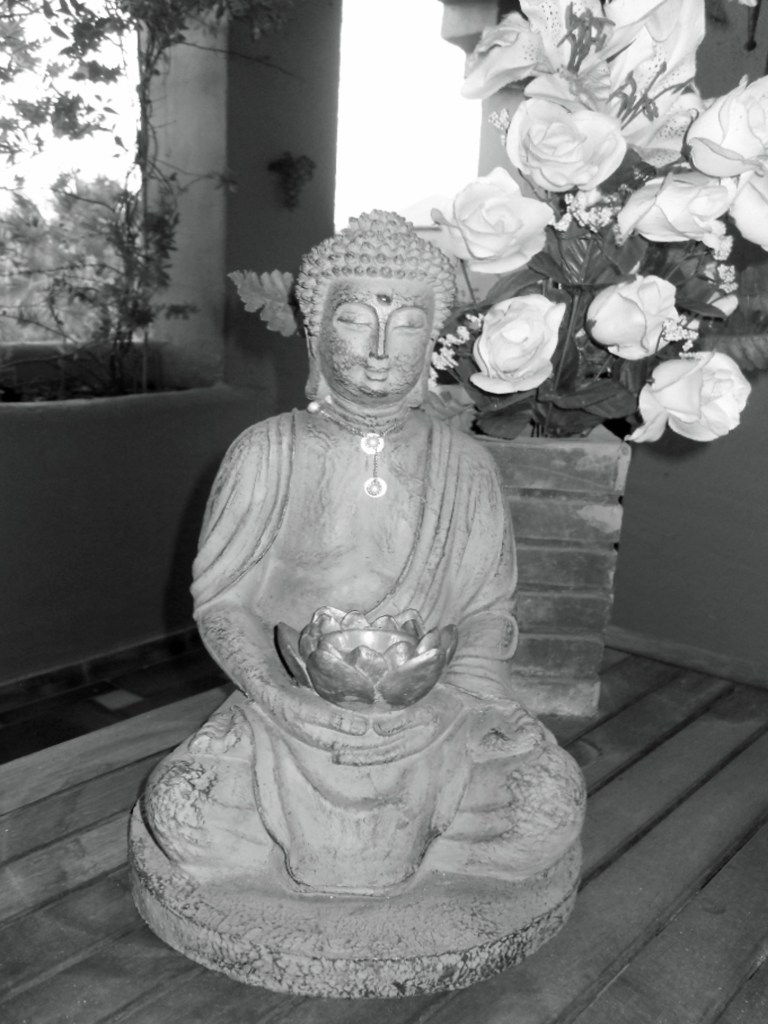
Katha (2.2.4): When this uncased Spirit (Immortal) that is in the body falleth away from it (body), when He is freed from it’s casing, what is there then that remaineth? This is the thing that thou seekest. Katha (2.3.13): One must apprehend Him in the concept “He Is” and also in His essential principle…Katha (2.3.17): The Atma, the Spirit within, who is no larger than the thumb of a man is seated in the Heart of creatures, one must separate Him from one’s own body…Thou shalt know him as the Bright Immortal…Perhaps we can see a contradiction to be reconciled in the Katha, which it does. Is It Literal or Metaphoric? The Atma is formless, timeless, and beyond physical dimensions. The “thumb-size” is a mystic device to help us turn inward to the presence of the divine within ourselves. It is literal and real and not apart from the Self viewed from the standpoint of the Self, but metaphoric and unreal from the standpoint of the ego or seen or seer as appearance. Like the world is an illusion and unreal as appearance, but real as the Self. Seen apart from the Self, phenomena are unreal, but real seen as the Self. Let us look at the empirical “realization” of Sri Bhagavan Maharshi Ramana. Firstly, He “tangibly felt” the Immortal Spirit (avesam) during His “Death Experience,” and did not abandon Him from that moment onwards. Secondly, He also “heard” endaurally the Spirit pronounce “I.” Thirdly, at Tortoise rock, His felt the “Life Force” re-establish itself within the right side of His heart, yet, during this episode of death, he remained “aware.” Thereafter, Sri Bhagavan a stopped neglecting the insentient instrument (body) as a block of wood, which He, for many years, did after his awakening. Sri Bhagavan by then was knowledgeable about the precepts of Vivekachundamani, Ribhu Gita, Bhagavat Gita, etc Though, His teachings are all from His own empirical realization. So, can we tentatively conclude that the Spirit (Personal God Ishwara) is not only tangible, speaks, and seen (we will come to this), which is the life force in the body, but also intangible as Consciousness? It is Sat-Chit-Ananda, i.e., Existence-Consciousness-Bliss. This is the precepts of Katha Upanishad. Now, we can perhaps tentatively differentiate the attributes of Jiva, Atma and Brahman. It is in the writer’s opinion that the Jiva is very subtle, tangible and conscious, can be heard and seen within, but Atma is even more subtle than the Jiva, and perhaps It is the intangible bridge between Jiva and Brahman. However, the great Seers state Jiva, Atma and Brahman are one. How does all this fit in with the writer’s empirical realization? On the fated day, March 17th 2014, three months after he embarked on the quest, sitting in his cave (in a closed room in an apartment in Estepona, Malaga, Spain), exasperated like a sulking child, frustrated at the quest without results, which he himself had pronounced to awaken himself, thus, after meditation, he sat with knees raised from padmasana posture, arms around the knees and hands and fingers spread out on his face as in a mudra (the writer will term it Jiva-Mudra, like Yoni Mudra on hindsight) without realizing. Suddenly and unwittingly, with the eye lids forcibly closed with little fingers pressing proximal to upper nose, he found himself engulfed in array of patterned visual phosphenes (photisms). In the centre was a yellow spot that appeared to have two wings, like watching a jet engine rotating at high speed. The thought occurred to him to see that which is behind the wings, thus, he concentrated with his full force of being at the spot. Lo behold, suddenly he was faced with a burst of a red, glowing smokeless rod or column of molten, the size of a thumb, surrounded by very bright burst of blazing Sun. He let go his hands immediately and became aware his eyes were wide open, staring at the vivid phenomenon. Like a small molten piece of the Sun lodged within and without the body. His eyes started stinging and burning, so stark was the “Sun Burst.” He lost all sense of himself, body, mind, time and space. Perhaps, this mystical event lasted a few minutes until the phenomenon gradually faded away, leaving behind an array of purple phosphenes. What was that? Occurred to the writer. He was in awe, tears gushing out of his eyes. Joy filled his being for many days. He rushed out of the cave to the terrace. Later, when he calmed down, he said to his partner, I know the Buddha statue had his eyes open last night, for he saw, after the event, Buddha had his eyes closed, like most of all buddha statues. It was the day of full moon. So, let us examine “What was that.” Let us face it, Kundalini is always awakened in all creatures, without which, we would be merely be a corpse, a block of mud. We must also remember the “Seer” in all this. From his point of view, it is merely a glimpse, but from the point of view of the Self, it is the Self. Awakening means, to be able to realize (make real) our Beingness as opposed to merely living a life in ignorance of name and form (unreal). Self-Realization (Self is always real) is a joke because we are always realized (we as Existence are real). We exist, but we confuse our existence for that of the sense of the body (ignorance, unreal). The writer could not believe that such a “Stambha of Fire” exists in us. Did he (the seer) glimpse the Jiva, the size of a thumb, the living nuclear or core of power (Ishwara Personal God) within all creatures? What is that then? The Brahmana Guest that resides in all creatures as life power, which moves the breath, and departs living the body dead without life, is this not that which we seek (Katha Upanishad)? Sri Bhagavan realized the Immortal Spirit within Him. He tangibly felt It and much later pin-pointed the area where it resides in the body, empirically. But for a Jnani the seer, knower, experiencer do not exist. After the “Death Experience” in Madurai, Sri Bhagavan whole Being (the awe) was then focussed on that immortal substance (Sat-Chit) within and not on the sense of the body or externals (seer or knower or experiencer). Viz, the “Immortal Spirit” moored him to Itself. Since his Jiva then became unmoored to his body, so He found firm mooring in the Arunachala Hill, viz, Arunachala lured and moored Him to Itself. He further realized the formless Self within form and without. This is the import of Katha Upanishad. The thing is this and we must understand this. It is not that we have to focus on That, but That Itself is then focussed on us! Because of the Self (Sat-Chit-Ananda) focussed on us, we are inclined (enforced) to remain silent and renounce. It is perhaps unnecessary to go into voluntary “mouna,” for it is natural when the Self is focussed on us to be in mouna; this is important to remember, viz, Self-Realization leads to involuntary mouna; voluntary mouna does not necessarily lead to Self-Realization. Mouna is silence of the mind, viz, peace (Sat-Chit-Ananda). Sri Bhagavan was naturally in mouna. The epitome of Vedanta reconciles form and formlessness as One substance, this is That Which Is, or He Is. The writer embarked on the contemplation of the external tangible Sun, rightly or wrongly, he took a detour perhaps for want of maturity, focused on the external God, the Sun, instead of focussing on the “awe” within as the Immortal Spirit, the molten Stambha of smokeless vortex of fire, because of the empirical “Sun Burst” as That Which Is. However, the writer eventually, through further reading, mysticism and insight made good the delightful detour (which in its Jnana is not far off the wisdom we gain by contemplating the Sun). The awe of the “Molten Sun Burst” moored the writer firmly in the Sun, viz., the Sun moored the writer to Him. Have we not felt a sudden lump in the throat or chest when we are suddenly confronted with death, all thoughts subside focussed on Life? What is that lump but the size of a thumb? We cling not to inhalation when drowning, but to that Life Force within, because when we face drowning, all thoughts subside grasping at Life, this is also Seeing Him, the Self, Existence-Consciousness, the Immortal Spirit (Ulladu Narpadu, Verse 28). Moored to the senses, body and mind the Jiva is inebriated in chaos by the clouds of ignorance, but once released from the chains, it is always and ever the Self. To conclude here, is the “size of the thumb” a metaphor or literal? Find out, for the writer can only meekly point to it, not take you to it, this is your work. Glimpses, burst of “happy,” high, piloerection, orchestral music, flute of Krishna, Jiva speech, Siddhas, Departed, Deities, (endaural, entopic, hypnagogia, hypnopompia, Kundalini related, etc) are never truly real but real as merely psychic phenomenon within the Seer. Remember, all this, the world and us, is merely psyche, for matter is merely psyche. Are we not truly awesome and amazing creatures? We have to decipher the real from the unreal, for the mind and the body are our tools. However, the Self does make Itself known in the gross plane because it is in the waking and the gross plane that we have to make real that which is always real by discarding the unreal, the transient, if you follow the writer’s reasoning. Remember, since the body is merely an appearance, so the “kundalini” and “chakras” encased in the body structure can only be likewise merely appearances. Why are we here? What are we? What was the basis, the real in the whole event that the writer described is…if you know then…This is Seeing God As He Really Is.
EXISTENCE OR ABSTRACT LIFE
We must look carefully and contemplate on the following Upadesa. Life or Existence itself is Abstract, not merely an opinion held by the writer but the truth, however it is tangibly felt within the confines of the body, even seen by the writer. We should not compound Life as or in the body as a sensation tangibly felt by our mind or senses or the body, however, many worship the Supreme Being, through the habit of loving devotion, as existing within the “lotus of the heart” as the Self, the life-current pervading their bodies, senses and mind, without which nothing could exist. Body, senses and mind are in Life is one of the final teachings. If all pervading Life is compounded to the body or the ego, when the body dies, there is no longer Life, and Life (as the ego) is said to escape the body. But does Life die with the death of the body? Life escapes and blends with Life. Like air in a jar blends with air when the jar breaks. Life does not die! One cannot kill Life because it is Abstract. Life is eternally immortal. So, Life or Existence-Consciousness must not be compounded and confined to the body, senses and mind. Existence in the ultimate sense is omnipresent and must not be compounded to the body. “I am here, not going anywhere,” said Sri Bhagavan in 1950 to his devotees, who placed too much emphasis on the body of Sri Bhagavan. This knowledge that Life is confined within the body is merely ignorance, and furthermore, it has arisen only through our ignorance. Why do we think we are here and the Life is in the body? We have left home through our desires and wandered here and thither, firstly in the subtle world and then being deeply ingrained in us, chasing insatiable desires, in the gross world. Life is itself self-effulgent and bliss, but it becomes confined in the body, like a bulb within the enclosing cover/shade, emitting dim light as a result of its confinement and becomes miserable. Therefore, we must endevour in this term on earth that we serve to get rid of ignorance, and go back from where we came from (Yoga of Death 3; Paradigm of the Self; the writer vigilantly traced, from waking consciousness to dream consciousness to deep sleep consciousness to “home” and have seen two separate intermediate subtle consciousness, but “home,” the transcendental Mother Goddess, soon kicked him out of the door back into the tracing his steps all the way back into the gross-waking world, lol).
O Lord of Day, you moored me firmly in Thy jaws, how and in what way could I escape Thee? So be It, for I found nothing but Thy presence. These ephemeral eyes sored gazing at Thy for over a year, how and in what way could I escape Thy presence. It is all day now, my ice heart melts in Thy bright and hot love, how and in what way could I escape Thy presence. Moor me and moor me forever in Thy jaws, for how and in what way could I escape Thy presence, O Lord of Day, have mercy on this monkey of a creature, for I will burn to nothing to grasp Thee. This creature follows you around a semi-circle gazing eastward, dawn or dusk, eastward he faces when you hide your glory, hoping to see Thee again and again. So how could I escape Thy. O Lord of Day, put an end to the dawn and dusk of this creature. Let your effulgence ever envelope this poor creature. With your rise, all is done, with your set, all is enveloped in rest, who is the doer then Thee mighty King. O Lord of day, how could I escape Thy mighty effulgence. O mighty Stambha of Fire, how can this Life be without Thy mercy.
MIND & SELF: DYNAMIC & STATIC CONSCIOUSNESS
Mind is the dynamic aspect of Consciousness; the static aspect being the Self. Inseparable they may seem, but the static aspect of Consciousness can be known and realized, like we know and realize the dynamic aspect as our mind. That is why it is said mind is consciousness. When the mind is stilled, there is only the static aspect of Consciousness present, viz, the dynamic aspect of Consciousness becomes still. The more we still the mind, the more the static takes over, the more we realize pure Mind, which is static Consciousness. Here there is no space. Imagine a spaceless Mirror, a perfect mirror that has no space to reflect. This is incomprehensible, so is the Absolute. If there is no space, how can anything appear in it? So, Consciousness (dynamic) is synonymous to space. Do we realize the importance space plays in Life? The power of reflection (space, which itself reflects) ingrained in the static aspect of Consciousness is known as Maya. Maya is itself abstract in reality, however we commonly term it as energy. It is not really energy, but an unknowable “power of reflection and concealment.” Its operation is automatic because it is the agent itself and does not need another agency to activate it, itself being self-sufficient. However, the static aspect is its basis since both are compounded. See how the dynamic aspect of Consciousness partitions the static aspect of Consciousness in space and diversifies itself into variety through its own inherent power. Since space itself is static, in a sense, and first to emerge out of its own reflection, it thus renders itself to partitioning into egos, like a clear mirror renders itself to reflections. Egos are merely space engulfing amoebae, so to speak, and thus, wrap themselves with the light of Consciousness (like a lamp shade) because Consciousness is omnipresent. Why is the Consciousness omnipresent? Is static Consciousness omnipresent? If there is space, if not, it cannot be said that static Consciousness is omnipresent, present where? Let us leave this aside for another day. However, we must remember that if the false I comes into existence, you and them also come into existence, in space, but in reality, there is only the One without the second, I without the you. Can Maya be insentient and fool itself? Since the static aspect itself is sentient, it cannot be proved beyond any doubt that Maya is insentient and foolish, how can it. How can the static project or reflect anything other than itself, i.e., sentiency or existence-consciousness-bliss? So, you see, there is nothing here that is insentient, there is nothing here except existence-consciousness-bliss. There is nothing anywhere as insentient, it is within Life, all of it. We think falsely that a rock is insentient. We think there is an insentient rock because we think we exist as a separate body from the rock. We are the rock, can we understand this? Because a rock does not say, ‘I exist’ or it is not self-aware, it does not necessarily mean it is insentient. However, who is there to see the rock as other than the Self? This is hard Huh! So is this immense power of concealment, Maya, which engulfs over us called ignorance or mind, the cause of duality. Like the mind reflects in itself the dream world, the static Consciousness reflects within itself its dynamic aspect of its Consciousness because of Its perfect clarity and self-sufficiency. It is Itself and like Itself, like a mirror and reflection in it. The static reflects the dynamic as the body, senses and mind or egos within itself in itself. This is fulfilment of desires held in the egos, the mechanism called karma. We are our worst enemies, because there are no enemies outside ourself, outside our own minds. You can clearly see who is the devil that disturbs our peace, our own mind. Therefore, no-mind is the static aspect and the ashram, the sanctuary, the solemn temple. But, if one sees the world rightly, even a rock is sentient and the Self and the world is the ashram. When did Sri Bhagavan Maharshi Ramana ever declare Arunachala Hill merely as a clod of clay and rock and insentient and unaware of itself? Because He saw it rightly, as himself or as the Self. Arunachala is the Self and sentient as the Self, is the jest of Sri Bhagavan because he saw it rightly, praise be! Who defined sentiency or Life anyhow? Scientists or Physicists? That’s a joke. Who can define Life or Sentiency? It is undefinable because it is abstract. One can know it and realize it, but cannot see it as an as an object of perception, that is why the writer says, “it is knowable and unknowable at the same time.” Difficult, eh? This organism, for example, is defined as being sentient and a rock insentient, is a joke. There is no sentiency or in-sentiency in That Which Is. It is and It is and it is all there is! If we open our “eye” and use Maya to comprehend Maya, we will see sentiency rightly, we will see Maya rightly. A magician might fool the audience, but he himself is not fooled, like Maya itself is not fooled by Her own trickery. So, our mind (dynamic) is an aspect within the Self (static). See this clearly. Mind and Consciousness are compounded; however, we must clearly make the effort to comprehend then separately, and must bear in mind that, Consciousness is the basis of the mind. No one can get rid of the static aspect of Consciousness. The dynamic aspect can come and go and change, however the static is static always. Be the static aspect of yourself; just witness and let the dynamic aspect play out. This is Seeing God As He Really Is.
THE ABSOLUTE
Is there such a thing as the Absolute or Brahman? The Absolute might as well have no existence, rather, Brahman might as well be merely a conjecture. One must identify oneself with as the Absolute, only then, it is possible to come to terms with the transcendental state. Inert and static It is the basis of all. What basis? How can the Absolute support anything if It is spaceless? It is omnipresent? Where, show me please? It is incomprehensible, right! Where is space in it? If there is no space in It, where is here and now and omnipresent? Is It omniscient? No-Jnana is Jnana and Jnana is no-Jnana. Here and now is mind stuff anyway, its spatial and temporal, and the past already, catch it if you can. Space is the first thing reflected, they say, without which, nothing can appear, nor time. The writer can only say the Absolute is silent, inert, unimaginable and spaceless. Is it self-conscious? It is neither Consciousness nor non-Consciousness, within or out with. There is no way in which It can be conveyance. So, tell the writer please, is spacelessness comprehensible? In what way? That is why it is said that mind or intelligence cannot go there; mind, the dynamic aspect of Consciousness, cannot survive or exist in spacelessness, because its nature is space. The Absolute is spaceless, therefore, there is nothing here at all; there is no reflection, no creation, no manifestation. In what way and how can these occur without space? To know and realize the Absolute, is to be the Absolute, spaceless, unreflective, unmanifest, so the closest idea of the state of the Absolute is called Nirvikalpa Samadhi, a state of total repose. The awe and the memory of the uncommon experience enables one to identify the transcendental state. Here only the One is, and that is I. I am the Absolute, who else? Tripura Rahasya, Ch XVII, Verse 110. Nirvikalpa samadhi is characterised by the experience of the true Self alone, namely, Pure Intelligence. Though eternal and resplendent even ordinarily, this Abstract Intelligence is as if it did not exist. If the I has no space, where is you? Who said I reflect or manifest, what, where? There is no space for you to appear, sorry. There is no partitions nor divisions in it, how can anything appear in It? I make all this appear, the world and you and them, in my space, in my own imagination, my own reflection, which I normally do whilst waking and dreaming, through my own Maya. Do we see how we reflect the waking, dreaming and sleep from within ourself in space and in time? Then we cringe and moan about misery. This is I who wanders looking for fun. Who is non-dual and dual? Clear the room to make space please, then I can manifest duality. I mean, there is only I everywhere, where from does the notion of non-duality arise? I will tell you, because the mind creates space for duality to arise, so we think about non-duality. Can we understand this? Tough, huh. Its tough alright. But it is easy, because I am the Absolute. The I is never anything other than the Absolute. Neither Sat-Asat, nor Chit-Achit, Nor Ananda-Aananda. You are bored, huh, so Moksha is out of the equation then, go wander about like I does. Tripura Rahasya, Ch XX, Verse 56. When the mind has completely resolved into the Self, that state is called nirvikalpa samadhi (the undifferentiated peaceful state). After waking up from it, the person is overpowered by the memory of his experience as the one, undivided, infinite, pure Self and he knows ‘I am That’, as opposed to the puerile (childish) I-thought of the ignorant. That is Supreme Knowledge (vijnana or pratyabhijna jnana). So, can time appear in no-space? No, Can Maya appear there? No. Can motion appear there? No. Can ether appear there? No. Is there cosmos in it? No. Is it outside the cosmos? Yes, beyond the mind. What can be? Nothing. This is Jnana. The Absolute is beyond the trinities, knower, knowing and knowledge; seer, seeing and seen; waking, dreaming and sleep, etc. Furthermore, can one distinguish the Self, Atma and Brahman? Since, it is beyond and transcends the mind, in what way can these be distinguished or partitioned, like this is the Self, this is Atma, this is Brahman? However, that which is common of the said is Consciousness. Consciousness, then, is, in other words, the Absolute or the Self or Atma. None of the said can be partitioned in reality because they are one and the same. Consciousness cannot be partitioned, however, Consciousnesses own power seemingly partitions Itself into variety…seemingly. Then walks in the Jiva and further partitions itself into waking, dreaming, and sleep, past, present and future, me, you and them, etc. This is the mystery beyond the trinities. Therefore, tell me if one behaves like a log of wood in Nirvikalpa Samadhi or one is engaged in duty, both abiding in Consciousness, what is the difference? None. As long as ignorance is crushed at its root; that is why it is said Sahaja Samadhi is best amongst all other states. That is why the writer maintains that I is the Absolute. When one penetrates the deep mysterious centre (viz, transcends the mind), which is in all beings, one’s selfhood is literally gone, absorbed into nothing-ness. On recollection, the writer can react and say, after much deliberation, it is spaceless or no-space. Can this be said to be absolute stillness? We must not even try and attribute the Absolute in any way. It Is. There is no love, no joy, no compassion, no positive nor negative emotions, etc in that state, let us not fool ourselves and others about this. When dynamic Consciousness merges into static Consciousness, what arises is simply the purity of the divine and static Consciousness. When we challenge the existence of the dynamic Consciousness within us, it disappears, leaving merely the light of the eternal static Consciousness. We have then realize our true state of purity and Absoluteness; in reality, there is only this, nothing else, and we are never apart from it. Gripped by static Consciousness results in a state free from rebirth, free from karma, free from misery, which has hounded us for many uncountable life times because we have abandoned our natural state. Having said this, our reaction (human reaction) to the engulfing subsequent natural state, Sahaja or Turiyatita, is delight. We come down to earth so to speak and are filled with delight. Worldly transactions will go on, dying, death, and whole caboodle will be witnessed, pain and pleasure will be witnessed, but we will be free from the ignorance that has gripped us for numerous births, and that is because of I-am-the body-sense that long grasped us. Now, the Self grasps us, cradles us, for we cannot grasp the Self, the Self cradles us. though we are the Absolute. The Self then reflects clearly through the I. Goodness will follow us. Love will follow us. Compassion will follow us. We will lose I-am-the-body sense, we will gain the Absolute-is-I-sense. With this new sense on-tow, we will see the Self as all and the whole and everywhere present. The chase is finished. That’s It. Off course, there are a variety of Sages engaged in all sorts of dharma and duties, from abiding in Samadhi to ruling their kingdom, for their prarabdha makes it so, but no-Jnana-Jnana is never lost, in fact, it never gets lost; Our human reaction to Sages is judgemental because we constantly and habitually partition static Consciousness. To this we have to make the effort to repair within our own self. Only then we realize this is Seeing God As He Really Is.
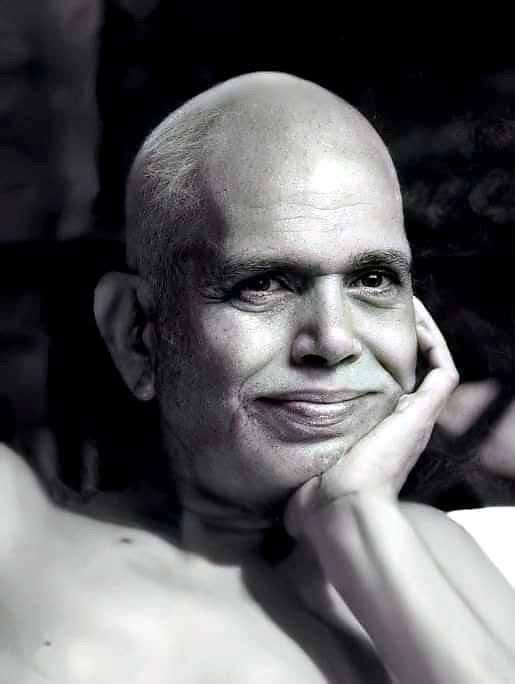
Let us see what Sri Bhagavan has to say: “It is possible to perform all the activities of life with detachment and regard only the Self as real. It is wrong to suppose that if one is fixed in the Self one’s duties in life will not be properly performed. It is like an actor. He dresses and acts and even feels the part he is playing, but he knows really that he is not that character but someone else in real life. In the same way, why should the body-consciousness or the feeling ‘I-am-the-body’ disturb you once you know for certain that you are not the body but the Self? Nothing that the body does should shake you from abidance in the Self. Such abidance will never interfere with the proper and effective discharge of whatever duties the body has, any more than the actor’s being aware of his real status in life interferes with his acting a part on the stage.”
A human Guru or an etheric one or Siddhas on the subtle plane, the Sun, a Tree or animals and nature teach us. They are everywhere, so to speak. Esoteric scriptures do help an aspirant, however, paradoxically, they will help establish one in Truth even more so once fully awakened. Practice and knowledge are both needful, there is no doubt about this. Samadhi alone without esoteric knowledge and knowledge alone without samadhi will not do, this is the truth on the quest. Why? Because you have to transcend the trinities (wake, dream, sleep; past, present, future, seer, seeing, sight, knower, knowing, knowledge; etc) and paradoxes (good, evil; ugly, beautiful; pain, pleasure, birth, death; etc) to know and realize That Which Is.
Let the writer define “Darshan” for you. Broadly, from a lower perspective, Darsana (Sanscrit) means “sight” of a gross or subtle object of reverence in the form of an idol or an image, or perhaps even a place or a building. Paying homage, bowing, prostrations and salutations (verbal) are generally the gestures common to Darsana. You are humbled before a higher force. So, the only truth of Darsana is the seer. The intensity of Maya!
From a higher perspective, let the higher force push you inside yourself: your mind is coerced and conditioned. Because you are coerced into thinking by elders that you are separated from the divine you run here and thither seeking (to absolve you sins perhaps)? Being born is the greatest sin. True Darsana is being, is your own true nature. When are you ever in the absence of Darsana? Find out who is the “seer.” Are you not in full Darshana in deep sleep? At the age of eleven, in a toilet of a Gurudwara, Dippack insightfully realized “God is everywhere”! Darsana is everywhere and the core of your being, your life (being-consciousness) is Darsana! True Darsana is beyond the seer, the here and the now!
Let Dippack define “Satsang” for you. Broadly. From a lower perspective, Sat-Sang means in the association/company (sang) of the essence of truth (sat); thus arises the need for spiritual gathering or discourse, or Upanishad (sitting or association next to Guru: disciple sitting down near his teacher at the time of discourse), or sacred gathering. Only if the “I am the body-sense” or the “I-thought” or “I am this body and form” arises, does the sense of aspiring to come into close proximity or contact with the essence of truth arises.
From a higher perspective, let Dippack push you inside yourself: You have forgotten your true nature, like seeking to find your sunglasses adorned on your forehead you ask a Guru to tell you where your sunglasses lay hidden. Satsang means separation or duality or viyoga. Are you ever separated from That? Who separates you from That? Thoughts! True Satsang is in deep sleep, because there is only That in deep sleep and That You Are! So close or the closest contact you will ever have—Your own Existence! That is your true nature. Your Life (Being-Consciousness) is the Holy Grail of Bliss and the True Satsang!
So, you may well ask what is the difference between Darsana and Satsang. From a higher perspective, non whatsoever. Darsana and Satsang are one and the same thing, viz., you cannot have one and and not the other from a higher perspective, for they are not apart. Simultaneous illumination of Satsang and Darshan is the Self or Atma-Nishta; it is within the Self and the Self. There is nothing besides the Self nor apart from the Self. Show me the difference. But from the view of the lower perspective, they appear or are semingly different due to the intensity of Maya.
The Self is SATCHITANANDA! Meaning, it is neither insentient nor unconscious nor unhappy. That You Are! Let us look at the sovereign statement from a conceptual perspective SAT-CHIT-ANANDA. The writer also knows That Which Is as SAT-CHIT-ANANTA. In English, BEING/EXISTENCE/LIFE-ABSTRACT INTELLECT/CONSCIOUSNESS-BLISS/HAPPY/PEACE/INFINITE/BOUNDLESS/ETERNAL. What do these concepts/attributes mean? They mean “That Which Is” is neither ASAT nor ACHIT nor DUKKHA. Nor SIMITAM. In English, That Which Is is neither non-being/non-existent/insentient/lifeless nor unconsciousness/comatosed/inert nor miserable/sorrowful/unhappy nor finite/limited/confined. From the perspective of a Jnani/Sage That Which Is “Is,” viz., That Which Is or Being or Consciousness cannot be described but one can be It, realize It, Know It as the Self, the most intimate, as Life or Existence. Is your Life not obvious? Your Life is more obvious than a nut held in the palm of your hand. Besides, there is no one other than That. How can someone else or another being make you become aware of your own Life? You become aware of a living Guru and ask for instructions to become aware of your Life? Is it so? Strange huh? A True Sage pushes you inward to become aware of your Life. Chuckle! That Life, your own Existence, yes, your own Life-Consciousness, is one without a second. There are no others, or they or them, nonsense, there is only you. So, there is no awareness of awareness. It is absurd to even think it, see it or even make yourself become aware of It because it is the mind that plays such tactics; No mind is That Which you are in Reality. You search for Reality, You Are That! All a Sage does is make it plain that it is not-this, not-this. All descriptions fail. Why? Because there is no mind, there is no another awareness to be aware of That because It is Itself Awareness. Even SAT-CHIT-ANANDA-ANANTA drops dead at its own feet. The Self pushes you inward and wants you to be thoughtless. Then lets your thoughtlessness (no-mind) lead you to the alter of the most sacred, Pure Mind. We can say, That You Are, Tat Tvam Asi. You create the Sage and then go to him for instruction. You are the greatest creator. You create variety, then, you ask a Sage what is non-duality, funny huh. Your creation, including variety, is non-dual, if your eye is open.
Repeatedly, In Spain, many times, many different grades and states of being have been witnessed. One such of It happened naturally in Estepona, Spain, ending in immense inner burst of true happiness. It happened again naturally in a small village near Geseke, Germany. In a very old house that was refurbished by us in 2020/2021, there exists in the back garden an old Cheery tree; the writer usually listen to the songs of birds in the evening, sitting, being thoughtless, not meditating at all. On the fated days of Full Moon, Purnima, which were the 12-13 of July 2022, subsequently, from the 12th to the 15th of July 2022, over several days and prior odd days, the writer noticed being dreamless; increasing in intensity over days, the writer became dreamless and thoughtless. The writer woke up on the 12th of July morning in an intense thoughtless state, went downstairs and made himself morning ablution and tea and then, HE KNOWS NOTHING. Days later the chatter came back. Dippack realized and knew neither was there I nor not I, SAT nor ASAT, CHIT nor ACHIT, ANANDA nor DUKKHA, ANANTA nor SIMITAM.
Dippack recall here the state NASADIYA SUKTA (10th Mandala of Rig Veda; Wikipedia): Nasadiya Sukta (Hymn of non-Eternity, origin of universe): There was neither non-existence nor existence then; Neither the realm of space, nor the sky which is beyond; What stirred? Where? In whose protection? There was neither death nor immortality then; No distinguishing sign of night nor of day; That One breathed, windless, by its own impulse; Other than that there was nothing beyond. Who really knows? Who will here proclaim it? Whence was it produced? Whence is this creation? Gods came afterwards, with the creation of this universe. Who then knows whence it has arisen? Whether God’s will created it, or whether He was mute; Perhaps it formed itself, or perhaps it did not; The Supreme Brahman of the world, all pervasive and all knowing He indeed knows, if not, no one knows.
Let us examine Sat-Chit-Ananda further. Holy Sage Vasishtha explains to Rama, “…The truth or existence-consciousness-bliss absolute is beyond thought and understanding, it is supreme peace and omnipresent, it transcends imagination and description. There arises naturally in it the faculty of conceptualisation…Here Vasishtha distinguishes the absolute from the relative. One would think when one comes across the words Sat-Chit-Ananda to be the attributes of That Which Is. However, Vasishtha implies there is relative Sat-Chit-Ananda and absolute Sat-Chit-Ananda. Let the writer tell you. What could Dippack attribute to that realization and knowing? It is on hindsight that Dippack realized that these three words mean something. Absolute has not such things nor anything to grasp—It is Silent, It transcends the mind. Was I That? Who is there to say I know, or I don’t know, I saw and I did not see? The great “Seers” of the Upanishads and Sastras and the utterings of Mahavakyas are merely concepts to be proofed because there is no one who can see nor know in Kevala Nirvikalpa Samadhi. Vasishtha is right, “Truth is beyond thought and understanding…” Dippack must add, but, knowable and realizable! Easily! Therefore, we can only conceptualize Truth as Sat-Chit-Ananda as relative–Sat (Existence, Life) as relative, Chit (Consciousness) as relative, and Ananda (Bliss, Happiness) as relative, all of which have their opposites. When the mind is completely absorbed into the Self, it is known as Kevala Nirvikalpa Samadhi. In answer to Nasadiya Sukta, what stirred..the puerile ego stirred. Once out from that state, one knows oneself as I Am That in Reality and not the puerile I-thought or ego. That Consciousness is absolute and transcends the three states (wakefulness, dream and deep sleep) and comprises all the universe making it manifest. Nothing can be apprehended without its light. Will anything be apparent to you, if there be no consciousness? Even to say that nothing is apparent to you (as in sleep) requires the light of consciousness. Is not your awareness of your unawareness (in sleep) due to consciousness? Recapitulate your state after you break off from it, and then you will know all and the significance of its being knowable and unknowable at the same time. Thus, realising the unknowable, one abides in immortality for ever and ever. Now do we understand SAT-CHIT-ANANDA-ANANTA? All these words have an equal and reciprocal meaning, i.e., they are the same in their meaning. It is the Self, the light of lights. This is You! Yes! You are the mirror and the reflection. You even reflect the darkness of sleep, like smeared tar reflected in a mirror. You are self-effulgent! Yes! You are Sat-Chit-Ananda-Ananta. See this clearly. You are the absolute and the relative, the mirror and the reflection, the manifest and the unmanifest; you are the Life! This is Seing God as He Really is; Is Seeing You as You Really Are! Brahman is I. But I certainly Know Nothing. This is JNANA! All Knowing. There is nothing else to know or make known. Neither time nor space, neither eternity nor here nor now, how can any object arise when there is no space? Neither duality nor non-duality. What are these words anyway? Who is there to say, Ah, Non-Duality, Ah, Eternity, Ah This and That, etc. Just bla, bla, bla. Thereafter, just Being and being Life, the Self, smack in the middle of all paradoxes in the natural state Is. Who are You? What are You? You are SATCHITANANDA! It is incredible how HOLY your Life is, truly. Seek your own Darshan, seek your own Satsang! As you are, is Seeing God as He really Is.
Let us examine the following concept: Awareness of Awareness. Now then, Dippack have heard this many times said by devotees and disciples and Gurus. Is it the case of the blind leading the blind? Let Dippack correctly plead the following in the format used by Sri Bhagavan Maharshi Ramana. Ask yourself this (Vichara Marga). When you switch on a light in your saloon, do you then go and fetch a torch to see if the light is lit? Viz, do you need another light to see if the light is lit? It is absurd huh! Nothing can be apprehended without the light of consciousness. Then you go looking for that lit consciousness with another dull lit consciousness to see if the original lit consciousness is lit or not? Absurd huh! Will anything be apparent to you, if there be no light of consciousness? Even to say that nothing is apparent to you (as in sleep) requires the light of consciousness. Is not your awareness of your unawareness (in sleep) due to consciousness? Even so, is not the awareness of awareness (in waking contemplation) due to awareness? Stop this non-sense about awareness of awareness, even if it is metaphorically speaking, it is absurdity, if there is an awareness of awareness then Awareness is not! Basta! It is merely the I-thought, the psyche, playing tricks. Do you understand the statement “one without a second”? Huh? Do you Gurus, disciples, and devotees understand this? This is Seeing God As He Reaaly Is. Quote Sri Bahagavan Maharshi Ramana: Ulladu Narpadu; Verse 33: …Are there two selves, one to be known by the other? There is but One, the Truth of the experience of all.” Now ask yourself. So you go looking for the Sun to see the Sun; you go and fetch a torch to see if the lit light is lit; you go with a lamp to look for darkness. Harken.
It is that unchanging consciousness, the eternal witness of all movements of thought and appearance, which is who we really are. It is That which is our real, our only, Self.
“I am” is the Self of all selves. The final spiritual attainment is the identification of the Self with the Absolute and the Relative, recognizing no other deity but the eternal I, the Self, who is Life and everything, the mirror and the reflection in it.
Let us examine “Beingness” from two standpoints, absolute and relative. From a relative standpoint, our beingness is wholly focussed on the sense of the false self or the non-self, or the false I (mind, body, senses, perception, thoughts, emotions, actions, etc). From an absolute stand point, there is only the Self, i.e., the false I does not exist, ever. To cite a typical example of “being” is to see the relative and the absolute, the one whole, clearly demonstrated in Sri Bhagavan Maharshi Ramana. He clearly demonstrated “being in this world, but not of this world.” Dharma, Bhakti, Love, and Divinity. Bhagavan clearly demonstrated the reconciliation or the balance of form and formlessness, manifest and unmanifest, time and timelessness, bondage and liberation, limitation and limitlessness, dvaita and advaita. In the absolute sense, there is no bondage nor liberation, no creation, only Brahman. So, what is Atma (Self)? It is a format of the relative and the absolute reconciled as One, the Self. It sits smack amidst the absolute (Brahman) and the relative (Jiva), amidst the Muladhara chakra and the Sahasrara chakra so to speak in yogic terms, viz, the heart, Anahata chakra—a bridge amidst the absolute and the relative. Unconsciously, our lives are a clear demonstration of the relative and the absolute if our “eye” is open to know and realize. We transcend in deep sleep the relative world of waking and dreaming into the absolute world of deep sleep. To see this clearly, we have to remain vigilant in deep sleep, called sleepless sleep or self-abidance or turiya. Yes, there is the absolute beingness in Kevala Nirvikalpa Samadhi vs both relative and absolute in Sahaja Nirvikalpa Samadhi (a balanced state of Atma or Ishwara). Sri Bhagavan demonstrated both, Paramarthika (Absolute; only Brahman exists, no world, no ego, non-duality.) and Vyavaharika (Relative; the ego, the body, duality, the world of appearances, actions, relationships, love, compassion, etc). Note that Vyavaharika is a phantom, for it does not quench the thirty like the water-mirage in a desert does not quench ones thirst. So, what is unconditional Jnana? It is the direct realization of Atma Sahaja Samadhi or the absolute and the relative, viz, one foot in the world and the other firmly in the Self. This is Beingness, not losing sight of the Self whilst in the world. It is the realization of who we are, Life-Consciousness, neither the absolute nor the relative, but sat amidst both. Sri Bhagavan’s intention (act, will) to liberate Palani Swami and His mother, Sri Alagammal, out of compassion and not contradiction (there are no others, there is no bondage or liberation, there is only That, etc) clearly demonstrated Him being in the world of appearance, viz., perfection, love and compassion, removing merely the ignorance of separation (viyoga, sever the knot of karma). In my supposition, the writer presents to you Ardhanariswara (circumnutation, Girivalam, around the still Arunachala; viz, Maya or movement or agitation is supported on Arunachala, the screen that supports the cinema show). “The jnani sees no one as ignorant. He sees only the Self. But to the ignorant, he appears to help them awaken.” So, Ramana’s act of liberation of his mother wasn’t a contradiction, it was a compassionate gesture within Jnana, helping her awaken to the truth that she was dreaming, never bound, and sent her ego homeward into the Heart, sunk or merged at its source, never to emerge. Therefore, Sri Bhagavan did not contradict his wisdom. This is unconditioned Jnana (the world and the absolute merely as the one whole Self). Like Suka left the sanctity of his true home and fell into the dream world only to be awakened to the fact that he was dreaming by the Lord of Death, Yama. So, Bhagavan’s life shows clearly that non-dual wisdom doesn’t negate compassion out of love but transmutes the egos and sends them homeward to merge at source. His guidance of his mother did not contradict Jnana, it was within the luminous Jnana in itself (world within the Self and not independent of the Self), from both standpoints. Stillness alone is nothing (Shiva); motion alone is nothing (Shakti). Sat, Life, Existence-Consciousness is amidst the paradoxes and reconciliation of the relative and the absolute without contradiction is Advaita Vedanta’s Sahaja Samadhi. Let me tell you. It is not as if we do not realize the Self at any given moment, we simply do not recognize the Self for want of being attentive to It—we are too busy chasing happiness. This is Seeing God As He Really Is.
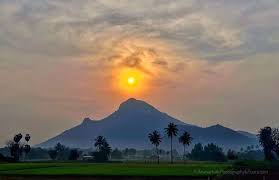
THE METAPHORS OF VEDANTA
THE OCEAN: The ocean is often mentioned as a metaphor in Vedanta. Let us look carefully at this. There are many aspects of an ocean from the surface waves, tides, tsunamis, volcanic fires, earthquakes, to froth on the surface, evaporation, etc. However, the most important nature of an ocean is water and the surface that supports the ocean. In the latter context, it is often cited that the river merges in the ocean and becomes one with it. Also cited in Vedanta texts is the fact of the turbulent waves on the surface and the still abyss as a metaphor of the mind and the Self respectively, viz, the surface being the turbulent mind, tossed here and tither, the Self being the calm of the deep of the ocean. So, where does the Absolute fit in the scheme of the metaphor. In the writer’ opinion, it is the bottom surface that supports the ocean in totality. Though all is the Self in Advaita Vedanta, like the water of the ocean being the same water on the surface and the deep, but the Absolute is the support of the water, the container of the water, which also support the abyss of stillness. Therefore, both the turbulence and the stillness are supported on the ground of the ocean, without which no water would exist to contain it. So, if the river or the mind merges in the ocean, it is not the end of “self-realization” in the writer’s opinion. The end is even beyond the stillness is what the write is trying to advocate. The end is solid like the surface that supports the ocean, this is no-Jnana-Jnana. How can the container be partitioned by the contained? How can the surface waters (mind) and the still waters (Self) partition the surface that supports both? Because the Absolute is One without a second, how can anything be different from Itself? Besides, it is no-space, which makes it impossible for anything to appear in It apart from Itself. If the Absolute was an entity outside to us, we cannot then come to terms with Its Absoluteness at all. If we carefully examine Advaita Vedanta, it has no conflict with mind nor the Self. It does come to terms with the Absolute, Brahman. There is nothing besides Brahman, it states. The only way we can come to terms with this is through knowledge (via sastras or via a Guru’s teachings) and first-hand practice. Letting aside knowledge, we discover or realize and know for ourselves that I cannot be other than the Abstract Life, that we are the Absolute. There is nothing nor another besides I here but the Absolute I. When we know this, we can then in all certainty know that we create the whole illusionary caboodle that appear and disappear through the inherent Maya within I. We are the magicians, yet we don’t even know that we are creating an illusion. Strange. A magician is never fooled by his own magic, yet, paradoxically, we are fooled by it, until we wake up to the fact that we are the magician. Makes the writer chuckle and chuckle. Even I is fooled by Its own magic because it is so incredible and astounding in which arises the illusionary sense of the body. The I is the greatest Wizard; just thing about how Its wizardry is so astounding, so instantaneous that It has brought about the sense the body, senses and mind, you and them and all that, the whole caboodle. How can a mortal being overcome its own great wizardry? Be silent and know I am I. When the I is gripped by deep silence, it knows nothing, it is merely the support of all, the surface of the ocean, not even the waters. Deep sleep is unconsciousness of ignorance, Nirvikalpa Samadhi is no-space Consciousness, and Sahaja Samadhi is our natural state of Absoluteness, where we are always the surface that supports the ocean and silently witnessing the abyss and the turbulence of the waters arising within itself. Here the metaphor of the surface of the ocean ends, because Consciousness is not literal screen nor literal surface, but no-space-space, no-Jnana-Jnana.
LIGHT AND DARKNESS: Let us turn our attention to another metaphor, light (and darkness). We have heard many a Sages mention the “light of Consciousness,” and “darkness of ignorance.” We have heard the Vedanta texts mention the “effulgence of Consciousness,” “Consciousness is bright,” “Consciousness is brighter than the Sun,” darkness cannot survive the Light of Consciousness,” “the Self is the light that removes darkness,” etc. Enlightenment is a metaphor too; to enlighten; here again light is used to mean the removal of darkness of ignorance. What on earth do they mean? Does Enlightenment literally mean one walks about like a hugely bright and lit star? Are we not conscious in the dark? Are we not ignorant in the light? Consciousness exists in the dark as well as in the light. Whether one is enlightened or ignorant, Consciousness exists in both cases. Are we enlightened during the day and ignorant during the night? Most human beings think they see with their eyes, and therefore, cannot see in darkness; as far as human eyes are concerned, this is so. From the higher point of view, we only truly see with Consciousness and not with eyes. Human reaction to the waking hours when the Lord of Day, the Sun rises, sets most in motion, whilst the reaction to the darkness of the night sets most to rest or sleep. This is the Human body’ circadian rhythm. But examine how dreams are lit so that the mind’ eye can see. So, we can say that human mind cannot cope with darkness, it cannot function well in darkness, for the mind becomes subdued unable to cope in darkness, or its own darkness within. When we close our eye lids, we are engulfed in darkness to start with, and this is why many meditators close their eyes, but to subdue the mind of distractions. If we keep our eye lids open (eyes they are always open, for eyes do not close, eye lids open and close; strangely, yet in sleep eyes wide open lids closed, the sense of sight disappears, like the ears are always open, yet we do not hear in deep sleep), so to speak, in utter darkness, we can easily discern the Self because the mind almost disappears into its source. The mind cannot cope in the absence of the senses of seeing, hearing, etc, because it is driven by the senses. When the senses are subdued, the mind disappears, like in deep sleep, coma, anaesthesia. Human mind cannot cope with blank or no-thing-ness, and so, it is engulfed by darkness on its disappearance. No-thingness is neither dark not light, so to speak, but the mind’ reaction to it is darkness, blackness or void, like tar smeared on a mirror internally reflects the blackness of the tar. What is then the difference between Nirvikalpa Samadhi and deep sleep? Both are alike. Both are profound. The subtle difference lies in the onset and end, for in the middle, both are alike and profound. Both are the sources of profound Jnana. During the onset of sleep our attention slackens and becomes almost absent, however, dreams sleep takes over because the mind is still active but subdued compared to its wakeful nature. In Nirvikalpa Samadhi the mind is lost (thoughtlessness) for a while when fully awake followed by complete and utter no-thing-ness; no dreams, not inner senses function, no thoughts, nothing. At the end of deep sleep, dream sleep again arises followed by being wakeful. At the end of Nirvikalpa Samadhi, thoughts return as chatter in the mind, fully awake. Nirvikalpa Samadhi can only happen during the peak of wakefulness or alertness, after a cup of morning coffee, makes the writer chuckle. Sleep overcomes us when alertness is at the trough. But for sleep the ego pre-prepares “going to sleep;” for one can never prepare, like going to sleep, the onset of Nirvikalpa Samadhi, but in preparation, we are more or less thoughtless as if in Sankalpa Samadhi. Consciousness underlines sleep, but Nirvikalpa Samadhi is that Consciousness, for it is neither light nor dark. Light and dark are the properties of the mind, not those of Consciousness, but used as metaphors in Vedanta. Consciousness can be perhaps better understood as Light and ignorance is better understood as darkness for teaching purposes only. We or human minds can grasp the idea of light and darkness easier than Consciousness and ignorance. Human reaction or rather the reaction of the mind to Consciousness is light, which is the wakeful state; but to unconsciousness is darkness, which is the sleep state. The mind uses the reflected power of Consciousness or Light to see within its created dreams, for dreams are lit. A dark mind, which does not reflect light within the sphere of the eyes, cannot project nor see dreams. I we carefully watch dreams, they are projected as if the eyes are seeing them, yet, they are within the mind, amazing wizardry. Even so, likewise, the body and the outer senses are a projection of the mind; for the body and senses are in the mind, the mind is not in the body. What happens at the onset of sleep? The mind ability as a wizard becomes subdued, as a result, the outer five sense and the body becomes subdued, yet not lost. Then the mind conjures up imagery within for its own satisfaction and the corresponding subtle inner five senses, the subtle body, and itself as the chief All of these then suddenly, like an on-off swich become switched off, as a result the whole caboodle disappears and simultaneously (unconsciousness) darkness of sleep engulfs the mind. What an astounding and amazing wizardry of dynamic Consciousness is this. It is just the opposite that the writer suggests as that which is worth our understanding. In fact, darkness is synonymous to static Consciousness (true Knowledge or no-knowledge) and brightness is synonymous to dynamic Consciousness (ignorance) as known during the wakeful and sleep states of our being respectively. It is the darkness of empirical knowing that enlightens a man and not the brightness of empirical ignorance. After this, that which enfolds and grips the wise man is neither the “bright” nor the “dark” Consciousness. Meaning, He is no longer allied to “darkness” of ignorance, that is all. In fact, He is in the “dark” fully awake and asleep in the bright (He is never asleep in reality). It is the bright of day that brings all the trouble of desires, and not the darkness of the night; for how can we desire anything that we cannot see? Makes the writer chuckle.
SNAKE AND ROPE: The metaphor of the snake and the rope often crops up in Advaita Vedanta texts of Sri Adi Shankacharya and others. The important feature of this metaphor is “dim” light. In dim light, the snake is taken for a rope, it states. What does “dim” light mean? It means either ignorance or dynamic Consciousness or the mind. Dynamic Consciousness is merely a reflection due to the clarity of the mirror being the Static Consciousness. Because dynamic Consciousness passes through the media of fog in space, it becomes dim, and does not truly reflect the full static Consciousness, like the light of the Sun is dimmed by clouds. This space or media is termed Upadhis by Sri Shankacharya, meaning, the fog of conditionings of the mind (vasanas). It is the vasanas inherited over numerous lifetimes that makes the snake appear as a rope, perhaps mostly out of the ingrained fear of snakes. It is this sense, the ego, that superimposes itself upon our true nature as I -am-the body or the I-thought. It is in space that the world appears out of the mind’s own wizardry. Even knowing that the snake is merely a superimposition on the rope, the illusion does not end. The metaphor further states, but upon closer inspection, the snake disappears revealing the rope. Here the rope is the Self. In reality, the snake is never ever there, viz, it is not really created at all in reality. Upon closer inspection means when one turns inward and through introspection realizes the true nature of one’s being. Even then, the illusion continues for the ones whom the vasanas are not all destroyed. Although the wise and the unwise see the sky as blue, the wise are not fooled by appearances, this is the difference between the wise and the unwise folk (in reality there is only I and no “unwise folks,” makes the writer chuckle). The sense of the body is superimposed on the Self, the false I is superimposed on the true I, yet, the false I never ever comes into existence in reality. Getting rid of the ignorance ingrained in us is all that is required for the true to reveal itself to itself.
MIRROR AND REFLECTION: In the metaphor of the Mirror and the Reflection, it is the clarity of the Mirror that reflects, for a smeared mirror does not reflect well the reflections. A mirror smeared with tar reflects merely darkness of the tar. A log of wood is unreflective, so how can a corpse reflect any Consciousness even though Consciousness pervades everything. Dynamic Consciousness is merely the reflection of the Static Consciousness because of its clarity, but dynamic Consciousness is besmeared with dirt of the mind. Once the mind becomes clear of the fog (ignorance, vasanas) it neatly imitates and closely reflects the true nature of Static Consciousness, known as pure Mind, in fact, it is in essence the Static Consciousness of the Absolute or the Self, this is the state of the one in Sahaja Samadhi. It is the false identification of the false I as the Self that results in duality, reflection, superimposition, dynamic Consciousness etc. And these are the pointers in all the metaphors of Advaita Vedanta that the non-identification of the false I is non-dual.
SUN AND MOON: The metaphor of the Sun and the Moon wass used by Sri Bhagavan Maharshi for those who sought answers to the perennial quest to the control the mind. When the Sun has set, the Moon is useful for displaying objects. When the sun has risen no one needs the moon, though its disc is visible in the sky. Here the static Consciousness (Self) is meant as the Sun and the dynamic Consciousness (mind) as the Moon. The mind driven by senses is useful whilst ignorance persists but becomes useless when the Self is realized and known, viz, once static Consciousness is realized, dynamic Consciousness becomes useless, like a lamp is useful during the night but useless during the day. To see the sun no lamp is necessary; it is enough if you turn your eyes towards the self-luminous sun. Similarly with the mind; to see the objects the light reflected from the mind is necessary. To see the heart it is enough that the mind is turned towards it. Then the mind does not count and the heart is self-effulgent. The dynamic Consciousness (ego) is superimposed on static Consciousness (Self) but in reality dynamic Consciousness does not ever come into existence.
HEART AND MIND: Hear and mind is a metaphor often used by Sri Bhagavan in answers to questions of the devotees. The Self is the heart, self-luminous. Illumination arises from the heart and reaches the brain, which is the seat of the mind. The world is seen with the mind; so, you see the world by the reflected light of the Self. The world is perceived by an act of the mind. When the mind is illumined, it is aware of the world; when it is not so illumined, it is not aware of the world. If the mind is turned in, towards the source of illumination, objective knowledge ceases, and the Self alone shines as the heart (Maharshis Gospel by S. S. Cohen; Chapter III). Therefore, all the above metaphors and others are merely pointing at the same thing; Seeing God As He Really Is.
VEDANTA: UNIQUE AND ENIGMATIC
Let us examine the Vedanta in short. Veda means the unique four Vedas, namely, Rig, Sama, Yajur and Atharva. Anta means summary or “end.” To summarise the four extensive religious texts is a masterclass of the great Sages of India. Vedanta comprises the exegesis (textual) of Upanishad, Brahma Sutra and Bhagavad Gita. The two great “sources” of knowledge were “Shruti” (revelation; that which is heard; the bulk of which are the Upanishads) and “Smirti” (that which is remembered, Itihasas, Puranas.). Source Wisdom Library:Shruti and Smriti are two categories of sacred Hindu scriptures, where Shruti refers to divine revelations (like Vedas) heard through inspiration, and Smriti represents traditional texts derived from memory, reflecting cultural practices and moral guidance. Let us now turn our attention to the content intended here. There are two thoughts that broadly define Vedanta according to the author’s humble understanding, they are: Pantheism and Panentheism. Pantheism says “all is God.” Panentheism says “not only all is God, but God transcends the Universe, time and space. The writer says “not only all is He, He transcends all, and all is in Him only,” and in fact, there is nothing here at all! Only one state exists, Turiya, that transcends all three states. In fact, what is there to transcend if nothing apart from Turiya exists?If we realize and know static Consciousness, the Self, one will know and realize what the writer says. Not only what the writer says, but all realized wise men do. What is there to realize? What is there to Know? What is there to transcend? The greatest secret is simply this, pure or static Consciousness. That You Are! This is It; Seeing God As He Really Is.
What is “Sewa” in Hinduism? From a lower perspective, it is selfless service to a gross form, be it of an elder or a Guru or a God. Wait, you don’t even know who God is, who Guru is, who humanity is, and who the world is, yet you want to service them? Funny huh! But, is it truly selfless service? You don’t even know who you are nor do you know who you service! Further, it is considered a form of dharma (righteousness) and is a way to earn good karma, which helps the soul achieve moksha (emancipation). Soul, Moksha, Dharama, huh? Ah, so you want to earn good karma, huh? Have free ladoos in the next life, huh. Is it truly selfless then? If you want to earn good karma, you will be reborn to reap its reward, right? So, it has nothing to do with Moksha. Do you want to come back here again? Don’t you want to break the cycle, the knot that binds you to the physical or the subtle realm? Wake up! The virtues of Sewa are extolled in the Bhagavat Gita as karma yoga. However, if Sewa leads to one pointedness, egolessness, from sadhana then it serves its purpose, which is to push oneself from outside to within. From a higher perspective, to know and realize the Self is the greatest “Sewa.” Wakey Wakey and smell the coffee! When you cut the knot of karma, it is the greatest Sewa to the world, humanity and God. The greatest Sewa rendered is to realize and know what you are in reality. Who is the doer? Find out by turning within. Then do what comes naturally (meaning, what needs to be done will be done through you). To stop the motion of karma is the greatest Sewa. Go figure it out. It is exemplified and amplified clearly in Sri Bhagavan. In the case of Palani Swami and Alagammal, both had developed a deep sense of attachment (karma) to Sri Bhagavan’s form. Why? Because of their own deep sense of “I am the body.” Of course, the attachment is severe in the case of a mother because a mother is deeply attached to her form giving birth to a form. From the very onset, Palani Swami developed deep attachment to Sri Bhagavan because of his own deep attachment to his own form (It was Sewa-Sathana). Sri Bhagavan chastised them both for their want of reflection. He tried to cut loose their knot of attachment (karma) through His teachings and Silence but to no avail. Stop karma! Basta! (Ulladu Narpadu, Verse 24). Deep attachment to the transient results in misery, birth after birth. In both cases, Sri Bhagavan sought to break the knot of such attachment (karma) and set them free when the moment was ripe, at the end of their life, but unfortunately, He failed in the case of Palani Swami and succeeded in the case of His mother. Sri Bhagavan acted as a conduit between the passing Jiva and Atma, between the ego and the heart, between individual (relative) consciousness and pure Consciousness (absolute), i.e., to redirect the Jiva directly to its source, Atma, preventing the Jiva (ego) to reap rewards of karma grasping by another form, hence, right hand on the head, left hand on the heart. Can an ego bypass Sri Bhagavan? Once you become prey to God, clutched in the jaws of a Tiger, can you escape? (Ulladu Narpadu, Verse 21). Wounded perhaps, but in the next birth, those wounds will fester away and sure liberation will follow. But Sri Bhagavan knew in his meekness he failed Palani Swami, but did He? Let us suppose, if Palani Swami opened his eyes at the last moment and had “darshan” of Sri Bhagavan, thus it is to have darshan of Atma at death. To breathe your last and have darshan of Atma is to get “Go Directly To Heaven Card.” Thus, in my supposition, perhaps, Sri Bhagavan did not fail on that occasion. Furthermore, Sri Bhagavan gave many disciples Diksha in the subtle plane and lit many other devoted candles in this their lifetime or in future rebirths, that is certain. This is true and unconditional Sewa without karma. Sri Bhagavan did send mature souls away from Him to diligently work on their salvation on their own by severing the knot of physical contact to Him (attachment, karma). This is also true Sewa. Attachment to form of a Guru or anything else is not good for a mature disciple or a devotee. Be in the world but not of the world. Do not get attached to ephemeral things. O Mother, Life is more than flesh and bone. Homeward bound, closest thing to yourself, is Seeing God as He Really Is. Sri Bhagavan said, “Grace of the guru operates only at the final stages of sadhana. Though the world is not beheld by the sadhaka in the last states, due to the persistence of vasanas the Self is not experienced and it is at this stage that the grace of the Guru, which is the grace of Atma, works and bestows the Ultimate.” Katha Upanishad 1:2:23 states, “Atma reveals itself to Atma.” Viz, the Self is realized by the grace of the Self only.
The Christian saint, Catherine of Genoa, proclaimed, “My Me is God, nor do I recognize any other Me except my God Himself.” Thoughtlessness is Bliss! Advaita and Dvaita have no real existence, they are mere concepts, because That Which Is is neither Dvaita nor Advaita. Who is ever there to say? Dualistic devotion might indeed lead one to knowledge of the Self, but from that point on, it becomes necessary to abandon all illusory dualities, and to become established in Beingness (the awareness soley of the Self). Only, Yoga is that hallowed realm where the “you” and the “I” have no existence! To discover the Self is our sole aim and goal in life! “The Yoga of Death” is the Quest of the Light of Truth!
Enlightenment is perpetual. Existence is a series of progressive updates, from infancy to decrepitude. Likewise, this site will be progressively and periodically updated. Stay tuned if you wish to follow this e-Papyrus. The Self is immutable through the series of deaths We all share a common ancestry. Our dear mother is the same, we call her the Earth. Our location is the same, we call her the plenum of Intellect. Our father is the same we piously call him God. This Dippack takes to learning at the behest of that which is eternal and mightier than mightiest, subtler than the subtlest, how to rid himself of ignorance by discovering that hallowed Self within. Dippack is no any chosen being, He is just like any other mundane fellow and ordinary being.The real “Darshan,” that which we should worship and adore, is the ideal that the writer has pursued relentlessly, only Dippack pays nor swear allegiance to any guru nor any cement swami nor any picture nor any idol, like an eclectic Bee that gathers pollen from many flowers, but swears no allegiance to any.
What is your understanding of Yoga? It is an ancient Vedic Sanskrit term, which is held loosely, misunderstood, and misrepresented by most; only Yoga remains undefined by Hindu Sages, Prophets and Avatars. Dippack cannot define Yoga either, for no one can! Nor has any ever managed to ever define Yoga! If you feel separated, then Yoga is for you. You can neither learn nor teach Yoga. Only, you may perhaps learn and then perhaps teach the various limbs or preparations that lead to Yoga. These preparations go by a variety of popular appellations like Samkhya, Karma, Hatha, Kriya, Raja, Astanga, et al, only these do not teach “Yoga”! You can take a horse to water, but you cannot force the horse to drink water
Are you Ready, Willing, and Able (RWA) to tame and become the master of the four dogs of your mind, namely food, sex, sleep, and fear? Are you RWA to renounce your ingrained ideologies, conditionings, and lusts (Artha, Kama, Dharma)? Can you handle the death of your loved ones styled as the troublesome and naughty four above? Are you brave? Are you willing to prepare yourself for the inevitable celestial journey? Yoga is not that; it is derived through negation, not this not this! Most hear but they do not listen. If you listen then you are on the right page and chapter of your life. Fear not of the unknown. Some help is at hand. I applaud and welcome your bravery. We are all here to learn from our experiences. Tend well to the sprouted seedling of spirituality within you with utmost care like a good gardener who patrols for weeds daily.
Pandora’s Box (Karma). You chose to shoot the arrow, with all your might, before you were born (just before you died). You manufacture a nuclear bomb of karma, then you want to build yourself a fall-out shelter from the explosion, makes me chuckle. Every day is a new dawn when we open our eyes after sleep, simultaneously, the pandora’s box opens and shoots out the day’s lottery balls, bitter or sweet, of events that will undoubtedly unfold until deep sleep engulfs us again. You may bite your tongue, but then, do you knock out your teeth? Who is to blame? There is nothing but karma here, there is no doubt about this. This Law is precise; it deals with all who think (I am the doer). Cause harm or do good, it will boomerang in its own way in due course, viz, sometimes straight away, sometimes in the next life, rest assured, it will come your way without fail. Sorry, but you deserve all you get, nothing more or less. Every day is a new birth and ends in death. See this clearly. Only respite we have is during deep sleep. There is no escape from this fact for the body nor the mind. This is who you are, right? Let us look at one of the first Upadesa from Sri Bhagavan Maharshi Ramana, which relates directly to the arrow of karma. Sri Bhagavan said, “The Ordainer controls the fate of souls in accordance with their past deeds. Whatever is destined not to happen will not happen, try how hard you may. Whatever is destined to happen will happen, do what you may to stop it. This is certain. The best course, therefore, is to remain silent.” Here, no one escapes the fall-out cloud of karma. Here silence does not absolve any of their karma, not does samadhi, i.e., it is within karma. Even walking in samadhi, you may be bitten by wasps, like Sri Bhagavan demonstrated. Here the arrow of karma is the Ordainer of the fate of all souls. This unfailing Universal Law has nothing to do with God. Leave God out of this equation all together. You yourself have shot the arrow and you yourself have created the exact environment (world) you find yourself right now to expend your karma. This cycle is endless. Look. “Why Bother.” This simple question arose in the writer. Why? All this Hindu Sastras, Greek Philosophies, Vedanta, etc. Why bother with all this. Why is Dippack engaged in writing esoteric stuff? You may wish to opt out and say, “I am fine, thank you very much, I don’t want to know the ins and outs of all this Spirit stuff.” Dippack says, “Hey, fair enough–Be Happy.” But, for those that thirst for this stuff, why did these philosophies ever come into existence? Look around you, the great chase for mula-in-the-kula, the cycle of pain and sorrow, birth and death. Dippack is not an exception. Dippack and you would have the dream life in the Caribbean. We are coerced by media, all that glamour, looks great. Look closer, it is nothing but karma and dukkha, believe me; Dippack has been there, seen it, done it and wore the tee shirt. Give it time, the great killer, it will all crumble into a heap of rubble and ash. Instead, this Dippack writes about esoteric stuff. He cares but cares not for materialism anymore, but more for Spiritual welfare. Dippack was led out of his ego-centric life into a new life. How and why? Just happened (Karma). Therefore, the writer would like to point out the “Why Bother” bit. To simply, answer, Pandora’s box, karma. Firstly, vichara (think, contemplate), secondly, reflect, thirdly, accept, fourthly, surrender, fifthly, shelter. Ok, let us look at the lives and reflections of Uddalaka Aruna’s, Rama’s, Buddha’s, Jesus’s, Saul’s, Socrates’s, Kabir, Ananada Mayi Ma, Sri Bhagavan Maharshi Ramana’s, Paul Brunton, Ram Das of Mangalore Ashram, to quote a few. Why did Buddha bother? He was rich, a prince to be crowned a king. Why did prince Rama remorsefully reflect and seek Sage Vasishtha’s wisdom? (See recommended reading below). Why did Sri Bhagavan leave home? Here, surely, we will find some answers to why. But the writer will point out to you as a reminder, like they have, simply reflect and examine yourself; look around you. We must reflect and look at our lives and events. We must look at our life which includes the happenings in our present life in the context of our past lives. Why is all this happening to me? Why this family, caste, race, religion, colour, wife, children, wealth, house, friends, relations, health, poverty, sorrow, disease? Who took what from me? Who is me? To whom is all this happening or has happened? Why am I born? Who to blame for this misfortune, because it is a sin in the writer’s book to take birth. Answer: That which you sow, you will undoubtedly reap—this is the Universal Law. So, that is why. There are three sets of karmic balls (lottery) in play–balls that have yet to fructify (future; new; agami), balls that are currently fructifying (present; allotted; prarabdha), and un-fructified balls pending fructification (accumulated; past; sanchita). The whole accumulated karma cannot be expended in one life-time, so some accumulated karma remains to be expended. And we add new karma to top up the karma yet to fructify in the future—what a heap of bitter-sweet toppings, huh! I did not order this Pizza! “Ah, you did,” says the deliverer. So, adding more and subtracting less, perhaps, the cycle goes on and on and the play of karma piles up. What is all this and why am I here. Is it not obvious? You started it! Don’t blame me. We see that King and pauper alike, Sadhu and Saint alike, all have to go through what is allotted, and this is why we must bother ourselves with esoteric knowledge and practise, for there is a way out of playing the game of karma. Acceptance and surrender and be silent, do not add new karma. No bribes accepted, which is an addition to karma. Be thoughtful in your acts today, do them so it does not add to karma. Abstract Intellect does not transgress His own Laws, but He can soften its blows; but Seeing God As He Really Is, you will blow all karma out of the window; it is razor sharp, be prepared, for you may lose everything you hold dear to you, warning. To who and to what does karma come? Ask yourself that and obtain that sovereign “get out of the jail card.” But attaining this card is a warning too, however, there is consolation, Mathew 6:33, “But ye seek first His kingdom and His righteousness, and all these things will be added to you.” It seems to the writer, often, karmic imprint of pain through disease, that which will be experienced over many lives perhaps, is accelerated near the time of death in the body of a Sage or a Saint. It is for an observer painful to watch when malady such as cancer takes its toll on a revered Sage; he may even groan and moan in pain, who wouldn’t, but endures with a brevity beyond understanding. Why? Is there a reasonable explanation? Perhaps karma offers us some wisdom in its operation. Look at it from the writer’s view/way; the non-self is a tumour, a malignant metastatic cancerous growth out of the Self, which is the cause of the endless cycle of dukkha. Did not Sri Bhagavan say, “the body itself is a disease. One should inquire into the origin of the disease, not look for ways to lessen the disease, which this disease (the body) contracted.” (Ramana Leela, Chapter 42). Did Buddha not seek a way out of the dreadful affliction of birth and death? Often an aspirant is forcibly relieved of family, property, wealth, possessions, etc., in due course, for thereafter, he is “sheltered” under the auspicious “Eye.” Happened to the writer, gradually losing his karmic imprints. This means that one who embraces spirituality will lose materiality or enforced upon to do so; besides, they are merely ephemeral and false afflictions. You cannot halt nor stop the impetus of the karmic arrow now, but one can soften its blows in this life and destroy forever the cycle of birth and death, there is no doubt about this. This is the answer to “Why Bother.” Ulladu Narpadu, Verse 38. Ulladu Narpadu Supplement, Verse 33. But to the great One, a Jnani, there is no karma, only the unwise see Him go through karma, for the Jnani is dead to his body and mind, how can then those three karmas afflict him? Even though pain comes or joy, it is within Jnana. He is in sleepless sleep, for in deep sleep there is no karma, no doer, no gain, no loss. Seek shelter from the bomb of karma; for the writer can asseverate, there is. Furthermore, read about the life and times of Saints and Sages. Recommended reading: Yoga Vasishtha of Valmiki, Book 1, Chapter 12-31, page 30-81. The Light of Asia, Edwin Arnold. Biographies of Sri Bhagavan Maharshi Ramana (Ramana Leela. Self-Realization). Notebooks of Paul Brunton.
Importantly, discover more about the Self. Not because I think I am, but because I am, thoughts arise.
SANKALPA
Let us examine this common Sanskrit idea held in the Hindu sastras. It drives the writer bonkers. Free will, Gods Will, Destiny, what for? Why explain to explain away? Damn nuisance, all of it. Sankalpa: San means connection to the highest truth, Kalpa means determination. But Sankalpa means aligning to the inner spiritual purpose from a lower standpoint. From a higher standpoint, Sankalpa does not exist. This is why it is said a Jnani (who does not exist really) does not have Sankalpa, meaning, He is Jnana, because there is only Jnana, no Jnanis, for He doesn’t align to the truth, for He is truth. We all are in Reality we just don’t know it. Determination to go where? Where to go? Inside? Inside where? Then to be told That is all everywhere, inside and outside. Explain to explain away. There is nothing, no explanation, no subject, no witness, no object, no inside, no outside, only Him (Consciousness pure). Where to go? Tell me please.
CONSCIOUNESS EXPANSION; YOGI NIDRA
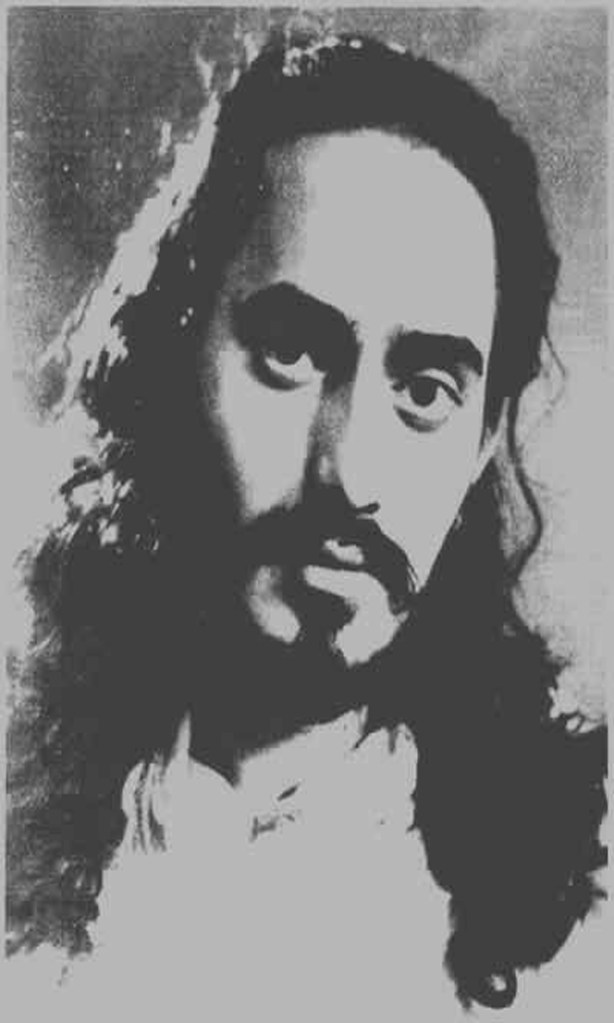
Let us examine the concept termed Consciousness Expansion, which aspirants come across during their Sankalpa or Sadhana in esoteric and metaphysical studies. What is Consciousness Expansion? The writer did grapple for a while with this concept and the idea of Yogi Nidra. During that period, the writer would daily listen to discourses on You-Tube presented by Swami Rama of Himalayas. Lo and behold, on an eventful afternoon during siesta in Spain, the writer found himself on the terrace with Swami Rama. The writer narrates in the ‘Yoga of Death, Book 1’ as follows. On a fateful and gracious Thursday afternoon on the 25th of September, 2014, as usual, I rest in bed, as it is termed Yogi Nidra. In Gujarati, a Thursday is called Guruwar (Day of Guru). Suddenly, I become aware in lucidity Swami Rama as a Siddha sitting beside diagonally to my left and facing me with me on a terrace chair. I say to him, ‘there is a deep dent in his nostril.’ Then, I ask him, ‘what is Consciousness Expansion’? He asks me to breathe as he places his hand and fingers on my face and gently squeezes below the chicks; I am made to look like a pufferfish breathing (or a mouth like that of a crow’s beak, which I discover much later). I immediately feel my head (skull) literally expanding and contracting three times full of air as if my head is inflating and deflating like a balloon; like a plastic ball on the beach been inflated and deflated. I want to ask him about the unconscious mind, but I did not remember at the time to do so. I feel a warm hand resting on my RHS side temple and I think it is that of my partner, but no, intuitively it was that of the Swami as the dream left me. Then I tried to continue breathing like a pufferfish, but I had awoken. As I recollect my lucid dream, that face is so familiar that I have been in his company and know him from somewhere, like a guru of a guru. He had a moustache, Indian and youthful. This is so real, vivid and profound. Insight tells me it was Swami Rama.Let us continue. Our mind “expands” in space to allow mystical experiences beyond the realm of waking and physicality, dream and dream body, but within the remit of the mind and intellect. Like transcending solidity into liquidity and further into gasity or airity. Makes the writer chuckle. There is no mystery attached to Consciousness Expansion, just that the esoteric sastras and spiritualists make it sound all mysterious because we seldom encounter it unless there is deep aspiration or devotion. We merely know the three states waking, dream and sleep, but there are “other or altered or hybrid states” within the three. It does not necessarily mean the “awakened mind,” though it is within the realm of the “mental eye.” Categorised as the realm of Mysticism; a kind of half-way house between matter and spirit for the one who is a spiritual aspirant or devotee. Since our true nature is Consciousness, and there is nothing besides Consciousness, which we ourself pollute by thoughts, for what is there to expand or contract? Yes, it is said when our focus is on an object, Consciousness contracts, otherwise it is the way it is naturally and all expansive. Our gross peripheral vision is less than 180 degrees and within the visible spectrum. Our gross hearing is within certain limits too. And so are our other gross senses. However, there are subtler expansive senses within that are even broader in spectrum so to speak. But attentive mind training and deep Sankalpa (inner spiritual aspirations) can highlight sensations beyond the norm—these come under the remit of Siddhis or Supernatural powers. They are not to be shunned as merely hindrances but enjoined as aids to our expansive understanding of our deeper and truer nature. It is here we can potentially receive diksha, guidance and inspiration, but also malefic influence. It is the realm of the Spirit, benevolent and malevolent, be warned. Often a Master will offer guidance to his devotee via this channel, which is well documented, like in the case of Ganapati Muni and Sri Bhagavan Ramana. Sri Bhagavan recalls lucidly dreaming approaching Ganapati Muni and confirmed with Ganapati Muni who recalls receiving such “diksha” in the realm of Yogi Nidra. It can be potentially the medium of communication between Master and Devotee. None of them deliberately sought such, but it happened automatically, when the devotee was in need. Our natural state is expansive Consciousness like space, which beholds the whole panorama of the sky. Look up on a clear night at the sky and you will see how massive your own Consciousness displays the panorama. How massive and wide is our own mind to reflect in Space such huge panorama. Look at your own dreams and you will see how expansive the panorama can unfold. So, what is Consciousness Expansion but the realm of the Seer? Tell me please. Ah, but we are not happy with this, we want to see and behold the whole cosmos. We want to stand at the edge of the Universe. Look. What is here is there, what is there is here. You want to be the Cosmo-scope, right? What for? Does your enlightenment mean this? Tell me, where is the edge so you can see the whole? We are within the reflective mind’s (seers) boundaries. Ah, you want to connect to other beings in the cosmos and interact with them. You can’t even interact with monkeys and slugs here, let alone beings and gods from other planets. Do not make it a goal. Our goal is to transcend the gross plane, the subtle, the causal, the three states of consciousnesses, the Seer (mysticism) and all other states such as Nidra. Consciousness Expansion is automatic without the need to seek, viz, it will seek the aspirant—in the plane of mind (seer). In fact, it is not “Consciousness Expansion” but “Mental Expansion.” Transcending means getting rid of thoughts. It does not mean literally being a siddha flying off to Jupiter to meet Brhaspati. All this supernatural stuff (realm of the mind and dream) is almost automatic when you are at peace, when you are in your natural state–it should not take you away from abiding in the Self. Abiding in the Self is the sommum bonum, is the sanctuary, the shrine, the mantapa. Yes, there are Sages who accomplish all sorts of feats, like Vasishtha, who flew in some distant sky to see Brahma, his father, only to be told off. So is their Karma. Mental Expansion is broadening your awareness within the mental plain but not the goal, let it happen naturally should we seek guidance or answers to perplexing questions of esoteric nature. You are That. How wide do you want to be? Get rid of the seer! Then you will realize your true Self, true Consciousness. Altering your perception with narcotics will expand your Consciousness? Are you stupid? Expands you psyche not Consciousness. The Seer is still there. Find out who the Seer is traced to it’s source, this source is the true Consciousness Expansion, the Self! Consciousness is the prop of the Seer, the Witness. Consciousness is infinite and the basis of all this play. This is Seeing God As He Really Is.
CONSCIOUSNESS
Consciousness they say; is, for each of us, all there is: the world, the self, everything. But consciousness is also subjective and difficult to define. The closest we have to a consensus definition is that consciousness is “something it is like to be”. There is something it is like to be me or you – but presumably there is nothing it is like to be a table or an iPhone. How do our conscious experiences arise? It’s a longstanding question, one that has perplexed scientists and philosophers for hundreds, if not thousands, of years. The orthodox scientific view today is that consciousness is a property of physical matter, an idea we might call physicalism or materialism. But this is by no means a universally held view, and even within physicalism there is little agreement about how consciousness emerges from, or otherwise relates to, physical stuff. Continues: Predictive processing is well suited for explaining why a particular experience is the way it is and not some other way, because we can understand these differences in terms of the different kinds of perceptual predictions the brain is making. In my theory, these differences are particularly significant when it comes to the experience of being a ‘self’, which I argue is not an inner essence that ‘does’ the perceiving, but rather a collection of perceptions itself. The self, in my view, is a special kind of controlled hallucination that has been shaped by evolution to regulate and control the living body. It’s not exactly a theory of consciousness, but you could call it a theory for consciousness. And it’s through ideas like this that I believe we will eventually come up with a satisfying scientific account of consciousness. Instead of solving the hard problem head on, we may end up dissolving it by developing and testing detailed explanations of how the properties of consciousness depend on their underlying mechanisms. In this way, we will have solved what I call the real problem of consciousness. Source: New Scientist; Consciousness.
How unwise is the above article. It is absurd. Look clearly, it means the switchboard (mind) cannot project sensations, no feedback, that is all. Anaesthesia, Coma, Amnesia and deep sleep are in the realm of the mind only, and nothing to do with Consciousness! Consciousness is different, giving rise to the mind, sustaining it and resolving it. So, Consciousness is the underlying principle. Scientists cannot separate mind from Consciousness. Trance and or Samadhi states are induced by meditators, it is well known. Some are like Coma or Anaesthesia. In and during Nirvikalpa Samadhi, Amnesia is total, meaning, who is there in this state to say? It resembles Coma or Anaesthesia. As if it might as well have not existed. King Janaka discourses (Tripura Rahasya: XV11, Verse110-111): Nirvikalpa Samadhi is characterised by the experience of the true Self alone, namely, Pure Intelligence. Though eternal and resplendent even ordinarily, this Abstract Intelligence is as if it did not exist. Abstract Intelligence is the background on which the phenomena are displayed, and it must certainly manifest itself in all its purity in their absence, although its appearance may look new at first. It remains unrecognised because it is not distinguished from the phenomena displayed by it. On their being eliminated it becomes apparent. This in short is the method of Self-Realization.
When we read about the attempts made by scientists to grapple with Consciousness, they are made to be seen as mere unwise in front of giants like the Hindu Sages of Yore on the subject at hand. Ulladu Narpadu; Invocation Verse 1: Can there be sense of existence without something that is? Is Real Consciousness a thing other than That? Since that (Reality) dwells, thought-free, in the Heart, how can It—Itself named the Heart—be meditated on? And who is there, distinct from It, to meditate on It, the Self whose nature is Reality Consciousness? Know that to meditate on It is just to be at one with it within the Heart.” You can see clearly through the New Scientist articles above their obsession with the seen and experience, viz, the mind, the I-thought. But they forget who is in coma or in anaesthesia or in Nirvikalpa Samadhi apart from Him? That cannot be banished at all. Consciousness cannot be banished! The Self cannot be Banished. Hindu sastras have been banging at this for centuries. Bhagavad Gita, “He cannot be slain…” Nor banished. But we know scientist are merely five sheaths of toilet paper. They will not find the root of Consciousness either. They only understand the five sheaths, beyond they cannot go, they cannot expand their Consciousness (transcend) beyond the five sheaths. He is the Self. He is Consciousness. Grapple with this all you like. There is no and will never be any instrument to solve the mystery of Consciousness, or God, or the Self. Can an instrument make an observer transcend his observation or mind? But if it can, then, will there be a mind and the instrument to record that transcendental experience? With what? Some App on the mobile perhaps. Makes the writer chuckle. You see, they are looking outside, not within themselves. Perhaps, the monk will say in Samadhi, ‘I am now transcendental, record so forth.” Makes me chuckle. What will the recording show in that state? It will clearly show Consciousness cannot be killed! But we know that for thousands of years now. Who has recorded in any format Consciousness on a piece of paper? As Waves? Sensations? Vibrations? Noise? Emissions? Light? These are only motion. Instruments can only record formats of motion, time and space, so does the mind. These are within the five sheaths. They cannot know nor record motionlessness. Consciousness is motionless, timeless, spaceless! Consciousness is the prop of motion, Itself being motionless or still. There has to be stillness for motion to appear, so any form of detection is merely the mind. Grapple with that then! However, recognize, realize and know It as the Self and Being It as It is in the Heart. This is Seeing God As He Really Is.
CONSCIOUSNESS AND ITS BANISHMENT
This is an interesting topic. Let us examine the unwise science. Anaesthesia, Coma and Amnesia and Deep Sleep. So, they think one can banish consciousness to nothingness using Propofol or Isoflurane. Makes the writer chuckle. These scientists are unwise. I will tell you why. They say they can banish consciousness and experiment on meditators with head gear. They have found, interestingly enough, the frontal cortex dissociates with the rest. The following is all mind stuff! Many anaesthetics are thought to work by making it harder for neurons to fire, but this can have different effects on brain function, depending on which neurons are being blocked. So, brain-imaging techniques such as functional MRI scanning, which tracks changes in blood flow to different areas of the brain, are being used to see which regions of the brain are affected by anaesthetics. Such studies have been successful in revealing several areas that are deactivated by most anaesthetics. Unfortunately, so many regions have been implicated it is hard to know which, if any, are the root cause of loss of consciousness. Both propofol and the inhaled anaesthetic sevoflurane inhibited the transmission of feedback signals from the frontal cortex in anaesthetised surgical patients. The backwards signals recovered at the same time as consciousness returned. The hypothesis is whether the preferential inhibition of feedback connectivity is what initially makes us unconscious. Similar findings are coming in from studies of people in a coma or persistent vegetative state (PVS), who may open their eyes in a sleep-wake cycle, although remain unresponsive. Laureys, for example, has seen a similar breakdown in communication between different cortical areas in people in a coma. Anaesthesia is a pharmacologically induced coma. That same breakdown in global neuronal workspace is occurring. My experience leaves me with a renewed sense of awe for what anaesthetists do as a matter of routine. Without really understanding how, they guide hundreds of millions of people a year as close to the brink of nothingness as it is possible to go without dying. Then they bring them safely back home again Source: New Scientist; Banishing Consciousness.
The writer’s comment: So, did you wake up as a pig or ignoramus? Why did you not wake up thinking and questioning if you are a man? No, you woke up as your self, name and form. So it has nothing to do with Consciousness! As discussed above, the aspect the scientist merely look at or rather can only look at is dynamic Consciousness. What anaesthesia, coma, Amnesia, sleep, etc pertain to is only the dynamic aspect of Consciousness, i.e., the mind. Static Consciousness is eternal and can never be banished, no even the most dreadful nuclear reaction can banish that which is unbanishable. Why don’t the scientist pickup the Bhagavad Gita and read it? There they will find a passage which clearly states in Chapter 11, Verse 20: The soul is neither born, nor does it ever die; nor having once existed, does it ever cease to be. The soul is without birth, eternal, immortal, and ageless. It is not destroyed when the body is destroyed. Kapish?
I, this Self, conceives the Soul as being, an existence, which has neither any form nor composition nor can be burnt nor dissolved nor slain, but it remains in eternity as an ultimate Unity. Although the embodied soul is entangled by the seaweeds (Upadhis) in the grandeur and hugeness of the ocean of the self of mind (Universe), the Self still remains and retains the Self, never lost in the multitude of the ephemeral microcosm, and consequently, the macrocosm. For the Self feigns through the Self, within the Self, all forms pertinent to the desiring mind that it finds the Self entangled through Maya only.
HINDU ORTHODOXY
We are made to feel alienated from God by our Elders (not any God of ours for choosing), so we are proselytized to embrace Bhakti, their God; we are made to feel separated from the Spirit, so we are made to embrace Yoga by Yogis, breath control, etc; we are made to feel ignorant by Spiritualist, so we made to embrace knowledge; we are made to feel we have to do to gain, fruits we will surely reap. If we see clearly that Vibhakti, Viyoga, Avidya, and Karma are merely concepts, then we will understand that there has to be black for white to exist. Everything, our intellect, our mind, our senses, will have to go in the trash bin, but we are used to this, aren’t we? You know, it is frustrating. Elders grab us by the ear and drag us into a hall of garlanded cement swamis. It is forced upon us to wear this and that, or take our shoes off, damn orthodoxy. I mean, chant the Vedas all you like, is a stuffed deer and real deer? No dear. I mean, come on, they, the priests and preachers, don’t even understand the basic. How can they shun a barber or a cobbler as unworthy, like a dog? In fact, some dogs are greater devotees then priests. They think an onion will blemish Moksha. They think Garlic will blemish Moksha, likewise, a dog, cobbler or barber will blemish them. Dattatreya; Tripura Rahasya; XVIII; Verse 19; Moksha is not anything to be got afresh, for it is already there only to be realized. Such Realization arises with the elimination of ignorance. Absolutely nothing more is required to achieve the aim of life.” How can Consciousness be blemished? By wearing shoes in a hall of worship blemishes Consciousness? Or is it that we will get magnetic vibes directly via our soles, or our Soul from a cement swami? Don’t we see the whole space is God? Just drop the ego, that is all that is required, and it is the greatest respect and reverence one can render. All this orthodoxy and dogmas is actually an insult directed at Abstract Intellect. Can we see this clearly? That can! As if That doesn’t know, so we wallop insults at It. How can Consciousness be tarnished? Tell me please. It is “tarnished” by thoughts, that is all. Let the writer illustrate by citing Sri Bhagavan Ramana Maharshi. There was a dog who revered Sri Bhagavan on the Hill. But this dog would dine at a Devadasi’s (Temple Dancing Girl) house in the evening and rest at a swami’s place. He would expend the rest of his time during the day around Sri Bhagavan who was fond of dogs and regarded them as devotees. Perhaps it was this very Devadasi who once performed at the Ashram in the presence of Sri Bhagavan, but he was unmoved and untarnished, observed by his excited biographer. All a play on the screen of Consciousness. So, what does a dog and a devadasi mean in terms of orthodoxy? Was there pollution? So, where does pollution arise? Do we reflect from whence comes this pollution? From the house we are born in, where else. Is a baby born polluted? Are we polluted in sleep slumber? So, we need to take care about the state of our mind because mind itself is pollution. What we don’t know, we know not pollution. Once Sri Bhagavan and an unorthodox devotee prepared breakfast for all, including orthodox cooks and others orthodox devotees at the Ashram. They did not know, so they ate the breakfast—their Moksha vanished. This is an Upadesa about the mind and pollution by Sri Bhagavan, that is why the writer says mind is pollution. Makes the writer chuckle. We must reflect within ourself and realize our true nature. Moreover, we must See God As He Really Is.
“The Yoga of Death” are confessions, musings, and notions solely derived by me and are to be treated as such. “The Yoga of Death” books are serialized into three parts. Learn more about why we should abstain from consuming meat; why we should masticate food properly and learn more about its benefits. Learn more about dreams and sleep, psychic and psi noumena and phenomena, sun-gazing and meditation, et al
Be Happy!
Discover more about the “Yoga of Death”
Special Deals and Offers
Grab an offer and start reading
RIP
Learn More
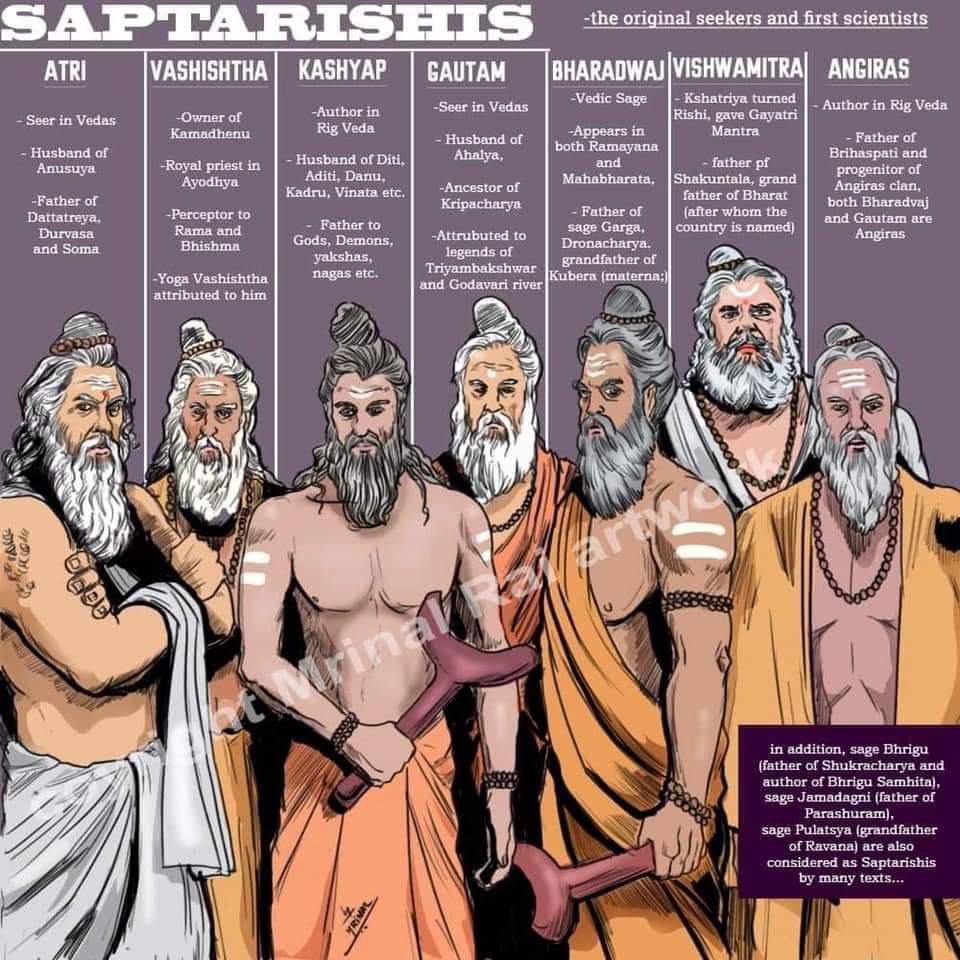
EXCLUSIVE OFFERS
Get RIP e-PAPYRUS I
for Free (limited)
Who doesn’t like a gift? Subscribe for your free book on Email Signup Form
 DIPPACK MISTRI