
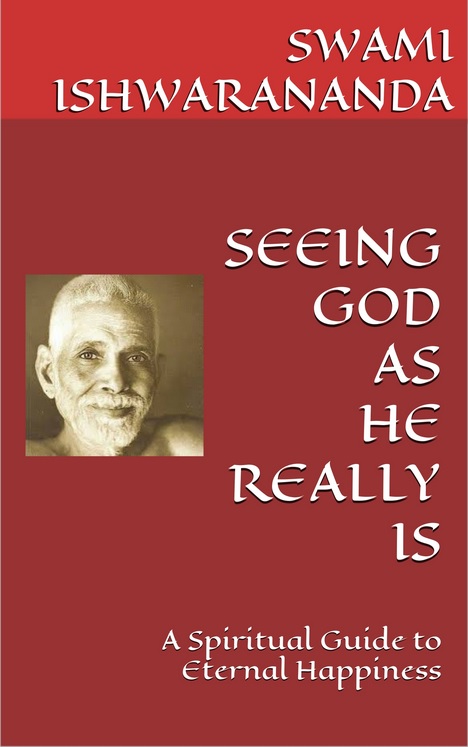
This is a blog on the attempted explications (insightful) by Swami Ishwarananda/ Dippack Mistri on Bhagavan Maharshi Ramana’s 42 verses on Reality (Ulladu Narpadu).
Swami Ishwarananda is the author and Dippack Mistri is the editor-publisher of the book, SEEING GOD AS HE REALLY IS
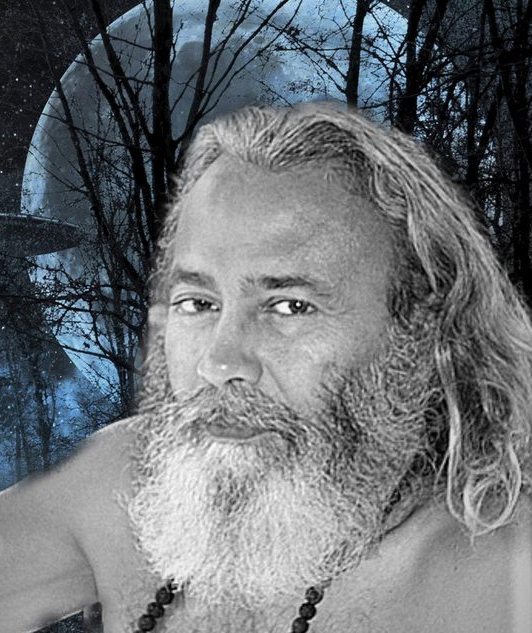
Swami is located currently in Europe. Seen to have taken birth in ancient East Africa to a pious Hindu family and subsequently relocated for further education to Europe. I am basically no-thing in reality. All these seeming locations are merely located in the mind. Where else does one seem to reside during the waking and dreaming states? From where does the me, set in motion, appear and disappear apart from on the screen of consciousness?
The mystery of my being unraveled itself in later years-‘it’s never too late,’ they say; ‘rather later than never,’ I say! Saint Kabir’s saying (below) comes to mind as my Bio.
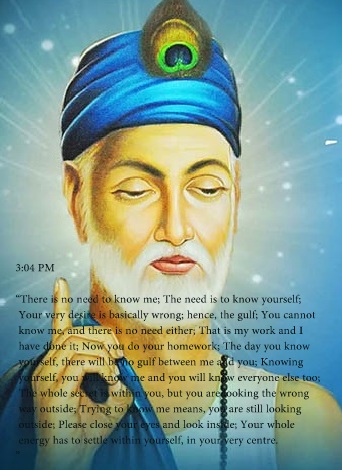
“There is no need to know me; The need is to know yourself; Your very desire is basically wrong; hence, the gulf; You cannot know me, and there is no need either; That is my work and I have done it; Now you do your homework; The day you know yourself, there will be no gulf between me and you; Knowing yourself, you will know me and you will know everyone else too; The whole secret is within you, but you are looking the wrong way outside; Trying to know me means, you are still looking outside; Please close your eyes and look inside; Your whole energy has to settle within yourself, in your very centre.”
Explore books authored by Dippack: https://dippackmistri.com/2019/11/12/books/
BOOKS REVIEWS LINKS – DIPPACK MISTRI(opens in a new tab)
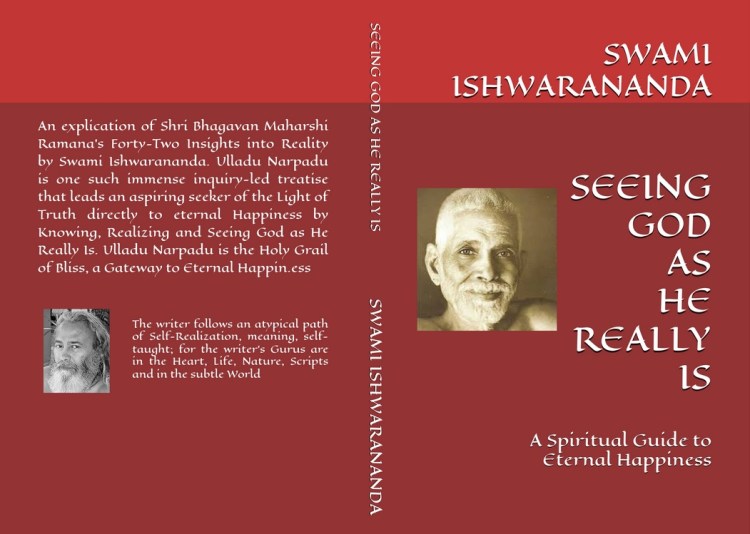
SEEING GOD AS HE REALLY IS
Print Book.
Author: Swami Ishwarananda/Dippack Mistri
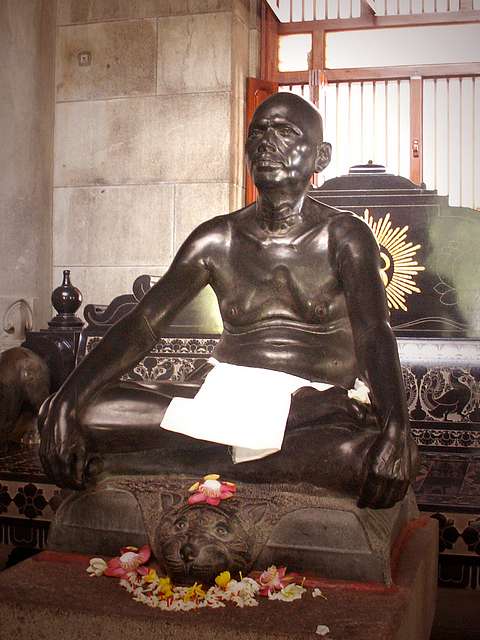
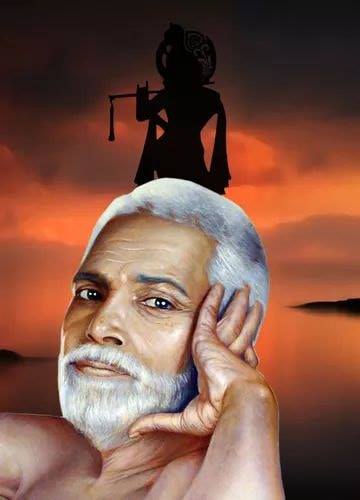
BHAGAVAN MAHARSHI RAMANA
THE 64TH NAYANAR
An opinion held firmly by the author that Bhagavan Maharshi Ramana was/is the most illustrious Nayanar in the 20th century CE amongst the 63 Nayanars during the 6th to 8th centuries CE.
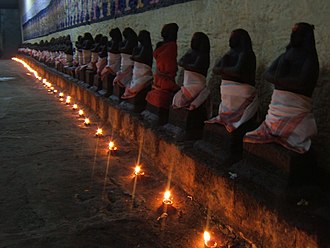
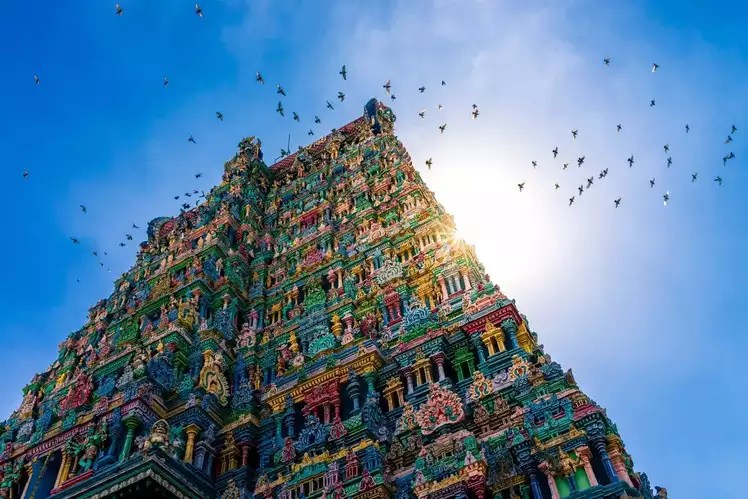
Bhagavan’s statue ought to find its righful place in the Meenakshi temple amongst the 63 Nayanars of Tamil Nadu! You heard this here first.
The Nayanars (‘hounds of Shiva’, and later ‘teachers of Shiva ) were a group of 63 Tamil Hindu saints living during the 6th to 8th centuries CE who were devoted to the Hindu god Shiva.
The Maharshi, indeed, is the 64th Nayanar of Tamil Nadu, there is no doubt about this. A wish that the Maharshi himself held within his heart, ‘why can’t I be granted the same grace of such ones,’ he pleaded in the Meenakshi Temple, Mudurai after the “experience od death,” nay, “the experience of the immortal spirit.”
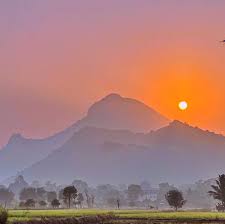
THE SUPREME, THE LORD, THE TRANSCENDENT, THE ETERNAL
THE ULTIMATE LOVE
SHIVA
ARUNACHALA
Eleven Verses
to Sri Arunachala
Arunachala Padigam
by Ramana Maharshi
tr. Arthur Osborne
1. Now that by Thy grace Thou hast claimed me, what will become of me unless Thou manifest Thyself to me, and I, yearning wistfully for Thee, and harassed by the darkness of the world, and lost? Oh love, in the shape of Arunachala, can the lotus blossom without sight of the sun? Thou art the sun of suns; Thou causest grace to well up in abundance and pour forth as a stream!
2. Arunachala, Thou form of grace itself! Once having claimed me, loveless though I be, how canst Thou let me now be lost, and fail to fill me so with love that I must pine for Thee unceasingly and melt within like wax over the fire? Oh nectar springing up in the Heart of devotees! Haven of my refuge! Let Thy pleasure be mine, for that way lies my joy, Lord of my life!
3. Drawing me with the cords of Thy grace, although I had not even dimly thought of Thee, Thou didst decide to kill me outright. How then has one so weak as I offended Thee that Thou dost leave the task unfinished? Why dost Thou torture me thus, keeping me suspended between life and death? Oh Arunachala! Fulfill Thy wish, and long survive me all alone, Oh Lord!
4. What did it profit Thee to choose out, me, from all those struggling in samsara, to rescue my helpless self from being lost and hold me at Thy feet? Lord of the ocean of grace! Even to think of Thee puts me to shame. (Long) mayst Thou live! I bow my head to Thee and bless Thee!
5. Lord! Thou didst capture me by stealth and all these days hast held me at Thy feet! Lord! Thou hast made me (to stand) with hanging head, (dumb) like an image when asked what is Thy nature. Lord! Deign to ease me in my weariness, struggling like a deer that is trapped. Lord Arunachala! What can be Thy will? (Yet) who am I to comprehend Thee?
6. Lord of my life! I am ever at Thy feet, like a frog (which clings) to the stem of the lotus; make me instead a honeybee which (from the blossom of the Heart) sucks the sweet honey of Pure Consciousness; then shall I have deliverance. If I am lost while clinging to Thy lotus feet, it will be for Thee a standing column of ignominy, Oh blazing pillar of light, called Arunachala! Oh (wide) expanse of grace, more subtle than ether!
7. Oh pure one! If the five elements, the living beings and every manifest thing is nothing but Thy all-embracing Light, how then can I (alone) be separate from Thee? Since Thou shinest in the Heart, a single expanse without duality, how then can I come forth distinct therefrom? Show Thyself planting Thy lotus feet upon the head of the ego as it emerges!
8. Thou hast withheld from me all knowledge of gradual attainment while living in the world, and set me at peace; such a care indeed is blissful and not painful to anyone, for death in life is in truth glorious. Grant me, wasteful and mad (for Thee), the sovereign remedy of clinging to Thy Feet!
9. Oh Transcendent! I am the first of those who have not the supreme wisdom to clasp Thy feet in freedom from attachment. Ordain Thou that my burden be transferred to Thee and my freewill effaced, for what indeed can be a burden to the sustainer (of the universe)? Lord Supreme! I have had enough (of the fruits) of carrying (the burden of) this world upon my head, parted from Thee. Arunachala, Supreme Self! Think no more to keep me at a distance from Thy feet!
10. I have discovered a new thing! This hill, the lodestone of lives, arrests the movements of anyone who so much as thinks of it, draws him face to face with it, and fixes him motionless like itself, to feed upon his soul thus ripened. What (a wonder) is this! Oh souls! beware of It and live! Such a destroyer of lives is this magnificent Arunachala, which shines within the Heart!
11. How many are there who have been ruined like me for thinking this hill to be the supreme? Oh men who, disgusted with this life of intense misery, seek a means of giving up the body, there is on earth a rare drug which, without actually killing him, will annihilate anyone who so much as thinks of it. Know that it is none other than this Arunachala!
The Holy Grail of Bliss; Excerpted Chapter from ‘SEEING GOD AS HE REALLY IS’
To be sure, few men, those spiritual mature, are capable of reaching such heights of knowledge, and fewer still are capable of sustained endurance in the rarified atmosphere at such altitudes of awareness. For this reason, a guru such as the Maharshi is most necessary and comforting to us. He leads us, confidently upward, over the rugged terrain of thought, and into the remote realms of unconditioned awareness. As we follow the Maharshi into the dizzying heights of unitive knowledge, we are privileged to share in some measure his exalted state. Reading only the first two verse of the “Introduction,” mature minds are immediately lifted to a realm of immeasurable calm and certainty. A few more verses, and we’ve become immoveable, invincible, unruffled, secure once more in the recalled knowledge of our own eternal Self, which, somehow, we had forgotten. Thus, simply by reading the words of the Maharshi, we are lifted into the freedom and exultation of his pure awareness, and made capable of tasting a little of the sweet nectar of our own intrinsic Bliss.
To abide in the eternal state of Consciousness, is to reclaim the Holy Grail of Bliss, as ours. Be of the certainty that permanent Bliss, can be realized now, and importantly, we can abide in it!
The proofing, and the unveiling, of the Holy Grail of Bliss, within ourself, is our task! The eternal Bliss-Consciousness, is ours to reclaim, when certain peace resides in our mind.
Through self-effort, and inquiry, but importantly, through the reciprocal Grace of the Holy Grail within us, Bliss can be realized, here and now, for the jewel of the Holy Grail, is for our taking!
Bliss awaits us, with open arms. Reclaim It whilst Alive! Be quick.
Bliss-Consciousness does not hide, we have veiled It, for too long, but paradoxically, we go toiling, and moiling for it, rather, looking for It, in this life. Know.
The ‘Holy Grail of Bliss,’ points to the shortest and the surest path, to the pathless land, where, rests that eternal state of Joy, through self-inquiry, but most importantly, and immediately, in this life, not the next.
Don’t the above mentioned sets of “four” appear and disappear during the “one day of Brahma”?
We have to remain as we are. It is not easy to be nothing!
It is our real nature to be happy
The ‘Holy Grail of Bliss,’ is a hallowed sanctity of eternal rest; for those feet that have trampled long, and hard, in the parched, and thorny desert of life (samsara). If we, our souls, do not rest in peace here, where then, can they rest, and attain the consciousness of peace? ‘There,’ they say, pointing their fingers or hands upwards in space, in heaven (proselytized), which is merely created by others or their fancy; but, instead, they ought to point their fingers or hands inwards, toward their heart, towards the Self. But strangely, we normally point toward our heart, when we refer to ourself as I.
‘SEEING GOD AS HE REALLY IS’ is a meek attempt by the writer to expound an explication of Ulladu Narpadu, but to quell the blazing fire of doubt, with the foam of conviction, and certitude, in the reader that the Bliss-Consciousness, is our real nature. It is to be attained here, and now.
In attempting an explication, add meat to mere bones, of this work, therefore, a certain familiarity with the insights of the Maharshi, and his state of pure Awareness, Sahaja Samadhi, is a greater asset than a purely linguistic competence. The meaning of the verses, is therefore, so condensed that an explanation is required, in many instances, to supply for himself the meat of the meaning to the bare bones which are provided. For this reason, a number of quite differently interpreted explication have been produced from the hallowed 42 verses.
I have attempted, in my own explication, of Ulladu Narpadu, to adhere very closely to the literal meaning of the word, while at the same time, taking certain liberties in order to bring out the full intent of the Maharshi’s insights into Reality.
These writings are for all who are free from all other cravings, apart from deeply yearning to know and realize the Bliss consequent on attaining the Self. They are not meant to address the ones who are seeking the vanity or esteem of parched philosophical knowledge or jnana.

What is all the toil and moil for in this life? Do we expect that state of Bliss to be found outside of us? Does Bliss abide in vanity? Are we to obtain that state of the permanency of Bliss, in the vain pursuit of marriage, progeny, wealth, love, or sex? Can we obtain the permanency of Bliss by indulging in narcotics or alcohol? Do we toil for it here to attain Bliss in the afterlife or in the next life? Must we search for Bliss, both, in nature, and in our nature?
Since, we do admittedly, obtain moments or longer of Joy ingrained in vain pleasures, only, it is transient, because of its association with an external agent, so we crave of its effects, even more, through pursuit or whatever means to that end; only, the external source or the means, may come to an end or become addictive, but then, even that bliss we experienced eludes us, and misery of craving takes over. Like a dog that chews a spiky, and broken bone, smeared in its own blood, from its own lacerated mouth, repeatedly, unknowing the tasty blood, is its own, subsequently, dying from its own infected mouth.
What does it take for us to reclaim our eternal state of Bliss? Misery? Do we need to toil to our ruin to attain the eternal state of Bliss? But then, do we have the surety of our current life, and many lives hereafter, in our hands? Do we need to be shocked into realizing our true nature as Bliss? Is it predetermined? Is it karma? How do we differentiate our vanity from that of a stray dog?
All human beings expend their energies chasing happiness, because the permanency of happiness, is our true nature. The whole movement of humanity, is geared toward happiness, is geared toward attaining permanency of happiness, by alleviating misery, but we experience only misery in this life as a result of the movement in time, in the chase of the transient. In vain, we mistakenly surmise, and expect, to attain eternal Joy, via or in association with the transient, and through the mutable or external agents. The nature of the transient, is not that of the permanent; for the nature of the thing permanent, the Holy Grail of Bliss, is not that of the thing transient, pleasure.
What is not attained, in any chase or in any gain, is a state of permanent blissful existence; only, what is attained, is dukkha, and the more we toil for Bliss, the more Bliss eludes us, and misery envelops us.
Expectation, is a movement in time in our mind, a proposed projection or the purpose of our action, for a future reward. We are here now, we want to be there then, or we are this now, we want to be that then.
Probability, unknowability, mutability, and transiency, of the outcome, are the four certainties that inhere to expectations, for the anticipated reward, is neither guaranteed nor permanent, therefore, chasing after happiness, a movement in time, is an uncertainty, a gamble. Know.
Expectation is our ruin, for the veil of ignorance inheres in it. When the movement of expectation, is eradicated, from our mind, the resultant state, is free from misery.
Because we are ignorant or have forgotten the certainty of the fount of Bliss within us, we waste our lives in vain, seeking, and chasing, for it outside of us, by way of external pleasures or other means to that end, unknowing, Bliss is within us, and our rightful nature. When the dark clouds of ignorance are removed, we shall be as we are meant to be, eternally Blissful.
Direct knowledge, Jnana, is itself the freedom from the self-imposed misery.
Mostly, we think we go from our state of misery or penury, to the state of eternal Bliss, involves vain thoughts, ideas, activity, motion, chase, but paradoxically, when we stop chasing joy outside of us in vain, nay, when the totality of the chase stops, when the motion or movement (the chase) is annihilated, when we rid ourselves of our ego, Bliss is the resultant state.
Motion or activity involves the mind, the body, time, and space, but importantly, misery even, but timelessness, is Bliss. Since, our ego is misery per se, and has to the power to break a person psychologically, and physically, so do we think in vain? We are certainly miserable because of our mind, which is the biggest burden we carry!
We are certainly broken emotionally, psychologically, and physically, by our egoistic pursuits, are we not? So, the question arises, can we mend ourself?
Becoming, is a movement in time, a storehouse of misery, but just Being, is the Holy Grail of Bliss, which cannot be known nor realized outside of us; for Joy is felt, known, and realized within us. The absence of thoughts, is Bliss.
The MAHARSHI asserted, “Why and to whom did this suffering come? If you question thus, you will find that the ‘I’ is separate from the mind and body, that the Self is the only eternal Being, the Lord, and that it is eternal Bliss. This is Jnana.”
The ‘Holy Grail of Bliss,’ in its totality, is inferred in the first verse of the Introduction of Ulladu Narpadu. Be quick to know. That’s It.
ACCLAIM
ULLADU NARPADU
FORTY-TWO INDELIBLE & INSIGHTFUL
PROCLAMATIONS
OF
SRI BHAGAVAN MAHARSHI RAMANA
O’ Hallowed Maharshi Ramana,
O’ Self of all Selves,
O’ That permanent Bliss-Consciousness,
O’ He that abides in all,
Even though, the writer, is worse than a stray dog,
O’ Bhagavan,
Look kindly upon the attempted explications,
Of your hallowed, 42 Srutis, on Reality.
The Forty-Two verses on Reality, are indelible and insightful proclamations of Bhagavan Maharshi Ramana, and the means to attain the Holy Grail of Bliss.
The MAHARSHI’s own awakening, is based on the “Fear of Death” enterprise. Ulladu Narpadu, is an inquiry-based seed of treatise, which sprouted from the hallowed ground of direct Knowledge.
Ulladu Narpadu, and Upadesa Undiyar, are two of the MAHARSHI’s major philosophical poems on “Jnana.” The hallowed, Ulladu Narpadu, revered by many, and by the writer, arose when the MAHARSHI was prompted by his disciple, the renowned Tamil poet, Sri Muruganar, to teach the means to “Direct Knowledge.” It is a Tamil poem that Sri Ramana composed at the start of the monsoon season in 1928.
The Tamil word, Ulladu, implies “Reality,” and, Narpadu, implies, “Forty.” Ulladu Narpadu, is a symphonic composition, originally in Tamil, Sri Bhagavan Maharshi Ramana wrote that delights the listener, and sets him free.
The MAHARSHI’s hallowed teachings, are based on a series of self-inquiries, because his own Jnana, is based on the inquiries into the nature of the Self. Can there be any other fast-track way of knowing, and realizing, Reality, the Self, other than directly through self-inquiry?
The clarity of Ulladu Narpadu, is almost if not completely flawless; for they are hallowed proclamations. It is our greatest fortune that such a hallowed One, left an indelible mark, on paper, and on the world. Ulladu Narpadu, is for the hearts that are prepared, and thirsty, to receive such graceful learning, and bliss, consequent upon it.
The explication of the MAHARSHI’s hallowed Forty-Two insights, into Reality, are expressions of the writer’s own meek Jnana. They can only convey notions, and concepts, like all esoteric scriptures, esoteric poems, and great sayings do, of that state of eternal Bliss, thus, perhaps, they may ignite a quest of the fire of Truth, in those who are ready, willing, and able, to make the effort to turn their mind inward.
This immense, and hallowed task, critical explanations, and interpretations, of an incredible, and blemishless source, “Ulladu Narpadu,” narrated by the MAHARSHI, of utmost importance to mankind, are before the writer. They are, in the writer’s opinion, the “Holy Grail of Bliss.”
The MAHARSHI’S certitude of Bliss-Consciousness, the “pathless land,” is faultless, meek, egoless, without conceit, and unassuming, besides, the MAHARSHI did not admit to being “a dispeller of darkness.”
The MAHARSHI’s teachings, are a catalyst that ignites the fuel-less fire of Jnana in an aspirant. These are “the” most profound, and direct writings, on Advaita Vedanta, surpassing Sri Adi Shankaracharya’s writings, and those of any other.
The MAHARSHI advocated two methods to rid oneself of misery (ego). One is self-inquiry (jnana marga; self-investigation), and the other is devotion-surrender (bhakti marga; egoless-worship). The admixture of both, should lead an aspirant, to the realization of his true nature, which is blissful existence, or the consciousness of bliss.
Sri Bhagavan Maharshi Ramana, sets an incontractible tone in his teachings, in the Introductory part of Ulladu Narpadu.
SUPPLEMENT: ULLADU NARPADU
Ulladu Narpadu Anubandham
According to Michael James: At that time Muruganar had collected twenty-one verses that Bhagavan had composed at various times, and he suggested that these could form the basis of such a text. Bhagavan began composing on 21st July 1928 and over the next two to three weeks Bhagavan discussed many ideas with Muruganar and composed about forty new verses. As he composed them they arranged them in order, and while doing so they decided that for one reason or another most of the previously existing twenty-one verses were not suitable to include in the text that he was writing. In the end, they decided to include in Uḷḷadu Nāṟpadu only three of the original twenty-one verses, namely verses 16, 37 and 40. Of these three, verse 16 was not actually included in its original form, which Bhagavan had composed in August 1927 (and which is now included in Upadēśa Taṉippākkaḷ as verse 13), but was modified by him while he was composing and editing Uḷḷadu Nāṟpadu.
The principal reason why they decided not to include the other eighteen of the original twenty-one verses was that most of them were not entirely suitable to the central aim of Uḷḷadu Nāṟpadu, which was to teach us ‘the nature of reality and the means by which we can attain it’. In addition to these eighteen verses, they also decided not to include three of the new verses that Bhagavan composed during the three weeks that he was composing and editing Uḷḷadu Nāṟpadu. However, since Muruganar did not want the twenty-one verses that they had thus decided not to include in Uḷḷadu Nāṟpadu to be forgotten or neglected, he suggested to Bhagavan that they should arrange them in a suitable order and append them as an anubandham (an ‘appendix’ or ‘supplement’) to Uḷḷadu Nāṟpadu.

Translated by Prof. K. Swaminathan
Italicised verses are the verses written by Sri Ramana Maharshi, the others are verses he incorporated into the text from other texts.
Invocation
That which is the Support, the Soul, the Source, the Purpose and the Power of all this world, the Reality behind all this Appearance, That indeed exists. Let That, the Truth, abide in our Heart. (Yoga Vasishta, 8, v.12)
The Text
1.	In the company of sages, attachment vanishes; and with attachment, illusion. Freed from illusion, one attains stability, and thence liberation while yet alive. Seek therefore the company of sages. (from Bhajagovindam, the "Mohamudagaram Hymn," by Shankaracharya)
2.	Not by listening to preachers, nor by study of books, not by meritorious deeds nor by any other means can one attain that Supreme State, which is attainable only through association with the sages and the clear quest of the Self. (a verse from the Yoga Vasishta, 5 - 12 - v.17)
3.	When one has learned to love the company of sages, wherefore all these rules of discipline? When a pleasant, cool southern breeze is blowing, what need is there for a fan? (a verse from the Yoga Vasishta)
4.	Fever is overcome by the cool light of the moon; want, by the good wish-yielding tree; and sin by the Holy Ganges. Those three - fever and want and sin - all flee at the august sight of the peerless sage. (Subhashita Ratna Bhandargara, chapt. 3, v. 6)
5.	Holy rivers, which are only water, and idols, which are made of stone and clay, are not as mighty as the sages. For while they make one pure in course of

countless days, the sage's eyes by a mere glance purify at once. (from Srimad Bhagavatam, chapt. 48, v. 31, tenth canto)
6.	Disciple: Who is God?
Master:Hewho knows the mind.
D:MySelf, the Spirit, knows my mind.
M: Therefore you are God; and also the sruti declares that there is only one God, the Knower.
M: By what light do you see?
D: The sun by day, the lamp by night. M: By what light do you see these lights? D: The eye.
M: By what light do you see the eye?
D: The mind.
M: By what light do you know the mind?
D: My Self.
M: You then are the Light of Lights.
D: Yes, That I am.(from Ekasloki, by Shankaracharya)
8.	In the centre of the Heart-Cave there shines alone the one Brahman as the `I, I', the Atman. Reach the Heart by diving deep in quest of the Self, or by controlling the mind with the breath, and stay established in the Atman.
9.	In the lotus of the Heart is pure and changeless Consciousness in the form of the Self. When the ego is removed, this Consciousness of Self bestows liberation of soul. (Devikalottaram, v. 46)
10.	The body is like an earthen pot, inert. Because it has no consciousness of `I', and because daily in bodiless sleep we touch our real nature, the body is not `I'. Then who is this `I'? Where is this `I'? In the Heart-cave of those that question thus, there shineth forth as `I', Himself, the Lord Siva of Arunachala.
11.	Who is born? It is only he who asks `Whence am I born?' that is truly born in Brahman, the Prime Source. He indeed is born eternally; He is the Lord of saints; He is the ever-new. (On celebrating Sri Bhagavan's jayanti))
12.	Cast off the notion, `This vile flesh am I,' and seek the ceaseless bliss of Self. To seek the Self while cherishing this perishing flesh is like trying to cross a stream by clinging to a crocodile.
14.	What is action, or devotion, or union, or knowledge? It is to inquire, `Whose is this action, or indifference, or separateness, or ignorance?' Inquiring thus, the ego vanishes. To abide as the Self, wherein these eight have never been, this is True existence.
15.	Not realizing that they themselves are moved by an energy not their own, some fools are busy seeking miraculous powers. Their antics are like the boasting of a cripple who says to his friends: `If you raise me to my feet, these enemies are nothing before me.'
16.	Since the stilling of the mind is true liberation and miraculous powers are unattainable without an act of the mind, how can they whose mind is set on such powers enter the bliss of liberation which is the ending of all activity of the mind?
17.	While God sustains the burden of the world, the spurious ego assumes its burden, grimacing like an image on a tower, seeming to support it. If the traveller in a carriage, which can carry any weight, does not lay his luggage down but carries it painfully on his head, whose is the fault?
18.	Between the two paps, below the chest, above the stomach, there are six organs of various colours. Of these, one, looking like a lily bud, is the Heart, at two digits' distance to the right of the centre. (from Ashtanga Hridayam, Malayalam)

19.	Its mouth is closed. Within its cavity is seated a heavy darkness, filled with all desires; all the great nerves are centred there; the home it is of breath, mind, light of knowledge. (from Ashtanga Hridayam, Malayalam)
20.	The Lord whose home is the interior of the Heart-Lotus is extolled as Lord of the Cave. If by force of practice the feeling `I am He, I am the Lord of the Cave' becomes firmly established, as firmly as your present notion that you are the ego is established in the body, and thus you stand forth as that Lord of the Cave, the illusion that you are the perishable body will vanish like darkness before the rising sun. (composed by Bhagavan, employing the ideas of two verses found in the Prabhulinga Leela, v. 45, 46, Kannada)
21.	When Rama asked, `Which is the great mirror in which we see these images of things? What is it that is called the Heart of all the beings in the world?' Vasishta answered, `When we reflect we see that all the beings in the world have two different hearts.' (Yoga Vasishta, 5 - 78 - v. 32, 33)
22.	One of these is worth acceptance, the other worth rejection. Listen how they differ. The organ called the heart placed somewhere in the chest of the physical body is worth rejection. The Heart which is of the form of Pure Awareness is worth acceptance; it is both within and without -- it has no inside or out. (Yoga Vasishta, 5 - 78 - v. 34, 35)
23.	That indeed is the essential Heart and in it all this world abides. It is the mirror in which all things are seen.It is the source of all wealth. Hence Awareness may be termed the Heart of all beings. The Heart is not a part of the perishable body inert like a stone. (Yoga Vasishta, 5 - 78 - 36, 37)
24.	Therefore by the practice of merging the ego in the pure Heart which is all-Awareness, the tendencies of the mind as well as the breath will be subdued. (Yoga Vasishta, 5 - 78 - v. 38)
25.	By constantly meditating in the Heart, `That pure unconditioned Awareness that is Siva, That am I,' remove all attachment of the ego. (Devikalottara, v. 47)
26.	Having investigated the various states of being, and seizing firmly by the mind that State of Supreme Reality, play your part, O hero, ever in the world. You have known the Truth which is at the Heart of all kinds of appearances.

Without ever turning away from that Reality, play in the world, O hero, as if in love with it. (Yoga Vasishta, 5 - 18 - v. 20 to 23)
27.	Seeming to have enthusiasm and delight, seeming to have excitement and aversion, seeming to exercise initiative and perseverance, and yet without attachment, play, O hero, in the world. Released from all bonds of attachment and with equanimity of mind, acting outwardly in all situations in accordance with the part you have assumed, play as you please, O hero, in the world. (Yoga Vasishta, 5 - 18 - v. 24 to 26)
28.	He who by Knowledge of the Atman is established in the Truth, he who has vanquished the five senses -- call him the fire of knowledge, the wielder of the thunderbolt of Knowledge, the Conqueror of Time and the Hero who has slain death. (a verse from the Yoga Vasishta)
29.	Just as on the earth with the coming of spring the tree shines in fresh beauty of foliage, even so he who has seen the Truth will shine with growing lustre, intelligence and power. (Yoga Vasishta, 5 - 76 - v. 20)
30.	Like one to whom a tale is told while his thoughts are wandering far away, the mind which is free from attachment is inactive while it acts. But the mind immersed in attachments is active, though it does not act, like the sleeper lying motionless here, who in his dream climbs a hill and tumbles down. (Yoga Vasishta, 5 - 56 - v. 13, 14)
31.	As the movement of the cart, its standing still and its being unyoked are to the passenger asleep in the cart, even so are action, contemplation and sleep to the Sage asleep in the cart of his body.
32.	For one who seeks waking, dreaming or sleep there is a state beyond these three, a wakeful sleep, a fourth state called the turiya. But because this turiya state alone is real and the three apparent states are illusory, the `fourth' state is indeed the transcendental state.
33.	The statement that the jnani retains prarabdha while free from sanchita and agami is only a formal answer to the questions of the ignorant. Of several wives

none escapes widowhood when the husband dies; even so, when the doer goes, all three karmas vanish.
34.	For unlearned folk there is only one family consisting of wife, children and dependants. But in the mind of those with much learning there are many families of books, theories and opinions as obstacles to yoga. (Subhashita Ratna Bhandagara, Prakarana VI, Shanta Rasa Nirdesha, v. 13)
35.	What is the use of letters to those lettered folk who do not seek to wipe out the letters of fate by inquiring, `Whence are we born?' What else are they but gramaphones, O Lord of Arunachala? They learn and repeat words without realizing their meaning.
36.	The unlettered are easier saved than those who are learned but unsubdued. The unlettered are free from the clutches of the demon Pride, they are free from the malady of many whirling thoughts and words; they are free from the mad pursuit of wealth; they are free from many, many ills.
37.	Though a man looks on the world as a wisp of straw and holds all sacred lore in his hand, it is hard for him to escape from thralldom if he has yielded to vile Flattery, the harlot. (from Sadhaka Avasta, by Sri Sadasiva Brahmendra)
38.	Without thinking of oneself as apart from others,without swerving from one's true state, if one abides always in one's Self, who is there alien to one? What matters it what people say of one? What matters it if one praises or blames oneself?
39.	Keep advaita within the Heart. Do not ever carry it into action. Even if you apply it to all the three worlds, O Son, it is not to be applied to the Guru. (Tattvopadesa, v. 87, by Shankaracharya)
40.	I shall declare truly the essence of the final doctrine of the Vedanta: when the ego dies and becomes That, the Self of Pure Awareness, That alone abides.
Translated by Prof. K. Swaminathan
 DIPPACK MISTRI