

I have experienced the truth of the infinite consciousness within myself, in which there is no sorrow, no delusion, no concern with dispassion, no desire to abandon the body nor retain it and no fear of the world appearance nor disappearance, neither I nor you nor mine. When the one single reality is known, where is sorrow, where is joy, where is destruction, what is body, what is world appearance, what is fear or its absence? I was in that state of consciousness which spontaneously arose in me. This is a humble expression that comes by itself, for it reflects the sentiments of all those who “awake” as Prahlada expressed to Sri Narasimha. Perhaps pictorial Auddalaki Aruni Gotama.Katha Upanishad.
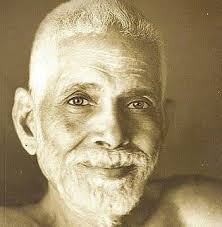
There is no duality. Your present knowledge is due to the ego and only relating. Relative knowledge requires a subject and an object. Whereas the awareness of the Self is absolute and requires no object. Remembrance also is similarly relative, requiring an object to be remembered and a subject to remember. When there is no duality, who is to remember whom? Relative knowledge pertains to the mind and not to the Self. It is therefore illusory and not permanent. One should go beyond such relative knowledge and abide in the Self. Real knowledge is such experience and not apprehension by the mind. An ignorant man cannot remain long in sushupti because he is forced by nature to emerge from it. His ego is not dead and it will rise up again. But the wise man attempts to crush it in its source. It rises up again and again for him too impelled by nature, i.e., prarabdha. That is, both in Jnani and ajnani, ego is sprouting forth, but with this difference, namely the ajnani’s ego when it rises up is quite ignorant of its source, or he is not aware of his sushupti in the dream and jagrat states; whereas a Jnani when his ego rises up enjoys his transcendental experience with this ego keeping his lakshya (aim) always on its source. This ego is not dangerous: it is like the skeleton of a burnt rope: in this form it is ineffective. By constantly keeping our aim on our source, our ego is dissolved in its source. like a doll of salt in the ocean. Maharishi Ramana

The pratyaksha (vision) of Siva: Talk with Maharishi Ramana.
Miss Umadevi, a Polish lady convert to Hinduism, asked Sri Bhagavan: I once before told Sri Bhagavan how I had a vision of Siva at about the time of my conversion to Hinduism. A similar experience recurred to me at Courtallam. These visions are momentary. But they are blissful. I want to know how they might be made permanent and continuous. Without Siva there is no life in what I see around me. I am so happy to think of Him. Please tell me how His vision may be everlasting to me.
M.: You speak of a vision of Siva. Vision is always of an object. That implies the existence of a subject. The value of the vision is the same as that of the seer. (That is to say, the nature of the vision is on the same plane as that of the seer.) Appearance implies disappearance also. Whatever appears must also disappear. A vision can never be eternal. But Siva is eternal The pratyaksha (vision) of Siva to the eye signifies the existence of the eyes to see; the buddhi (intellect) lying behind the sight; the seer behind the buddhi and the sight; and finally the Consciousness underlying the seer. This pratyaksha (vision) is not as real as one imagines it to be, because it is not intimate and inherent; it is not first-hand. It is the result of several successive phases of Consciousness. Of these, Consciousness alone does not vary. It is eternal. It is Siva. It is the Self. The vision implies the seer. The seer cannot deny the existence of the Self. There is no moment when the Self as Consciousness does not exist; nor can the seer remain apart from Consciousness. This Consciousness is the eternal Being and the only Being. The seer cannot see himself. Does he deny his existence because he cannot see himself with the eyes as pratyaksha (in vision)? No! So, pratyaksha does not mean seeing, but BE-ing. “To BE” is to realise – Hence I AM THAT I AM. I AM is Siva. Nothing else can be without Him. Everything has its being in Siva and because of Siva.
Therefore enquire “Who am I?” Sink deep within and abide as the Self. That is Siva as BE-ing. Do not expect to have visions of Him repeated. What is the difference between the objects you see and Siva? He is both the subject and the object. You cannot be without Siva. Siva is always realized here and now. If you think you have not realized Him it is wrong. This is the obstacle for realising Siva. Give up that thought also and realization is there.
D.: Yes. But how shall I effect it as quickly as possible?
M.: This is the obstacle for realization. Can there be the individual without Siva? Even now He is you. There is no question of time. If there be a moment of non-realization, the question of realization can arise. But as it is you cannot be without Him. He is already realized, ever realized and never non-realized. Surrender to Him and abide by His will whether he appears or vanishes; await His pleasure. If you ask Him to do as you please, it is not surrender but command to Him. You cannot have Him obey you and yet think that you have surrendered. He knows what is best and when and how to do it. Leave everything entirely to Him. His is the burden: you have no longer any cares. All your cares are His. Such is surrender. This is bhakti. Or, enquire to whom these questions arise. Dive deep in the Heart and remain as the Self. One of these two ways is open to the aspirant.
Sri Bhagavan also added: There is no being who is not conscious and therefore who is not Siva. Not only is he Siva but also all else of which he is aware or not aware. Yet he thinks in sheer ignorance that he sees the universe in diverse forms. But if he sees his Self he is not aware of his separateness from the universe; in fact his individuality and the other entities vanish although they persist in all their forms. Siva is seen as the universe. But the seer does not see the background itself. Think of the man who sees only the cloth and not the cotton of which it is made; or of the man who sees the pictures moving on the screen in a cinema show and not the screen itself as the background; or again the man who sees the letters which he reads but not the paper on which they are written. The objects are thus Consciousness and forms. But the ordinary person sees the objects in the universe but not Siva in these forms. Siva is the Being assuming these forms and the Consciousness seeing them. That is to say, Siva is the background underlying both the subject and the object, and again Siva in Repose and Siva in Action, or Siva and Sakti, or the Lord and the Universe. Whatever it is said to be, it is only Consciousness whether in repose or in action. Who is there that is not conscious? So, who is not realized? How then can questions arise doubting realisation or desiring it? If ‘I’ am not pratyaksha to me, I can then say that Siva is not pratyaksha. These questions arise because you have limited the Self to the body, only then the ideas of within and without, of the subject and the object, arise. The objective visions have no intrinsic value. Even if they are everlasting they cannot satisfy the person. Uma has Siva always with Her. Both together form Ardhanariswara. Yet she wanted to know Siva in His true nature. She made tapas. In her dhyana she saw a bright light. She thought: “This cannot be Siva for it is within the compass of my vision. I am greater than this light.” So she resumed her tapas. Thoughts disappeared. Stillness prevailed. She then realised that BE-ing is Siva in His true nature.
Muruganar cited Appar’s stanza:- “To remove my darkness and give me light, Thy Grace must work through ME only.”

NONE OF THESE GURUS NOR SAGES NOR ANY GODS OR GODDESSES, NOR SIDDHAS OR GOBLINS HAVE ANY EXISTENCE OUTSIDE THE SELF! THEY DO NOT EXIST IN OUR DEEP SLEEP. THEREFORE, THEY ARE TRANSIENT. THEY RISE AND SET WHEN THE EGO RISES AND SETS, THEREFORE, THEY ARE NOT PERMANENT. THEY ARE UNREAL. OUR LIFE IS A COMPLETE LIE, A COSMIC JOKE MADE UP BY THE SELF. THIS IS THE TRUTH!
Final Salutation by Sri Sankaracharya-Mandhukya Upanishad
I salute Brahman, the destroyer of the fear of those who take refuge in It; which, though unborn, appears to be associated with birth through Its own majestic powers; which, though motionless, appears to be moving; and which, though nondual, appears to have assumed many forms to those whose vision is deluded by the perception of diverse objects and their attributes.
I prostrate myself at the feet of the teacher of my teacher, the most adored among the adorable, who out of sheer compassion for the beings drowned in the deep ocean of the world, infested by the terrible sharks of incessant births and deaths; rescued, for the benefit of all, this nectar, hardly attainable even by the immortals, from the inmost depths of the ocean of the Vedas by churning it with the rod of his illumined wisdom.
I make obeisance with my whole being to those holy feet; the dispellers of the fear of the chain of births and deaths; of my own great teacher, who, through the light of his illumined wisdom, destroyed the darkness of delusion enveloping my mind; who put an end, forever, to my appearance and disappearance in this terrible ocean of innumerable births and deaths; and who enables all others, too, that take shelter at his feet, to attain unfailing knowledge of the scriptures, peace and the state of perfect non-differentiation.
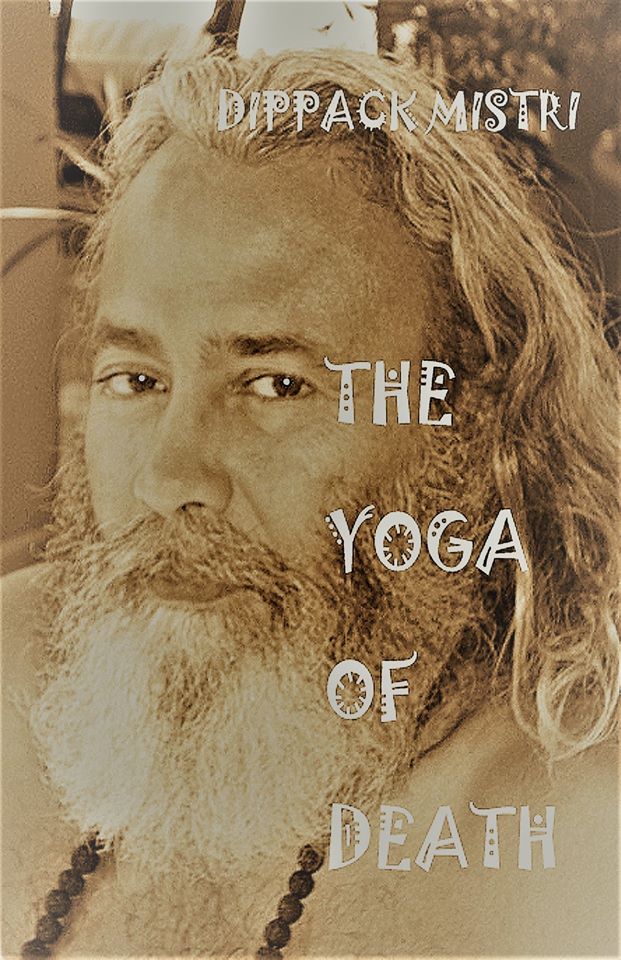
Nataraja, the King of Ceremony. Isha Upanishads’s first verse explains this very well. All this is the Lila of Lord Shiva, for the Lord is the formless, vacuous, Divine Intellect. Lord Shiva is “Nataraja,” composer, artist, painter, sculptor, dancer. All the archetypes are contained in Shiva as abstract holograms and image-animations within the divine Excellence. It is ignorance of an unenlightened mind that is accountable for motion and becoming, i.e., the world and its contents. He who renounces these shall have blissful life here and thereafter. The beholder of Divine knowledge, Vidya, renounces these, thus, is free from repeated births, deaths, decay, and diseases. Renouncing means simply observing the Lila of Nataraja, that is, acting as a desire-less witness. By cultivating a witnessing mindset of unboundedness, contentment, and peace within is happiness. Indifference is to allow our life, mind, and body to flow like a river, but to let Nataraja, the enjoyer, enjoy His own manifest Lila. He is the Shakespeare, the author, the act, the composer, the songwriter, the singer, the choreographer, the casting director, the cast, the actor, the actress, the lover, the loved, the seducer, the seduced, the villain, the hero, the house manager, the stage manager, the audience. He raises the curtains as well as downs the curtains. He is the beginning, the intermission, and the end. He is the King of Ceremony. He is the whole glossary of theatrical terms. He is the seed, the tree, and the flower and fruit. He is bitterness and sweetness. He is all and everything, lock stock and barrel. And there is nothing else besides which, ever was or ever is or ever will be, eternally. 🙏🕉✍️ Excerpts from “The Yoga of Death,” Year-Book 3. Dippack Mistri
According to Isha Upanishad; “Isha Vasyam Idam Sarvam.” The world is Lord Shiva’s ideal. Nature is an exhibition of Shiva reflected in the mind and projected as thoughts and image-animations. The mind reboots from the Vortex of individual consciousness image clone held within Shiva, like rebooting from a Windows ISO file. Every though already exists in the Solid-State-Drive, like in a Computer. Only the mind is nor merely an SSD but more than that. It is a Holographic-Consciousness-State-Drive (HCSD) that is capable to reflect Shiva’s ideal. There is no hardware, for the mind is a Virtual-Drive (HCSD) that is manifested through the inebriated embodied soul, like a fairy castle in the air manifested by foolish boys. HCSD is styled as the “Third-Eye,” which contains all the past, present, and future modes of thoughts, will and actions. So, HCSD is merely a witnessing master boot drive that never crashes, neither malware nor viruses effect it, for its life span extends to Shiva’s timeline of a Kalpa. It remains untainted because it contains all the three partitions and sub-partitions within.The mind does not have a physical existence; itself projects the ephemeral body (sub-partitions) from itself as vital and food sheaths (partitions), like a coconut seed, produces the tree and its fruit. 🕉🙏✍️ Excerpts from ‘The Yoga of Death’ Year-Book 3. Revised edition out soon. Dippack Mistri

TIME AND SPACE CANNOT AFFECT THE SELF
Maharshi Ramana asserts that “The Self is always realised. Were Realisation something to be gained hereafter there is an equal chance of its being lost. It will thus be only transitory. Transitory bliss brings pain in its train. It cannot be liberation which is eternal. Were it true that you realise it later it means that you are not realised now. Absence of Realisation of the present moment may be repeated at any moment in the future, for Time is infinite. So too, such realisation is impermanent. But that is not true. It is wrong to consider Realisation to be impermanent. It is the True Eternal State which cannot change. You are already That. Time and space cannot affect the Self. They are in you; so also all that you see around you are in you.”
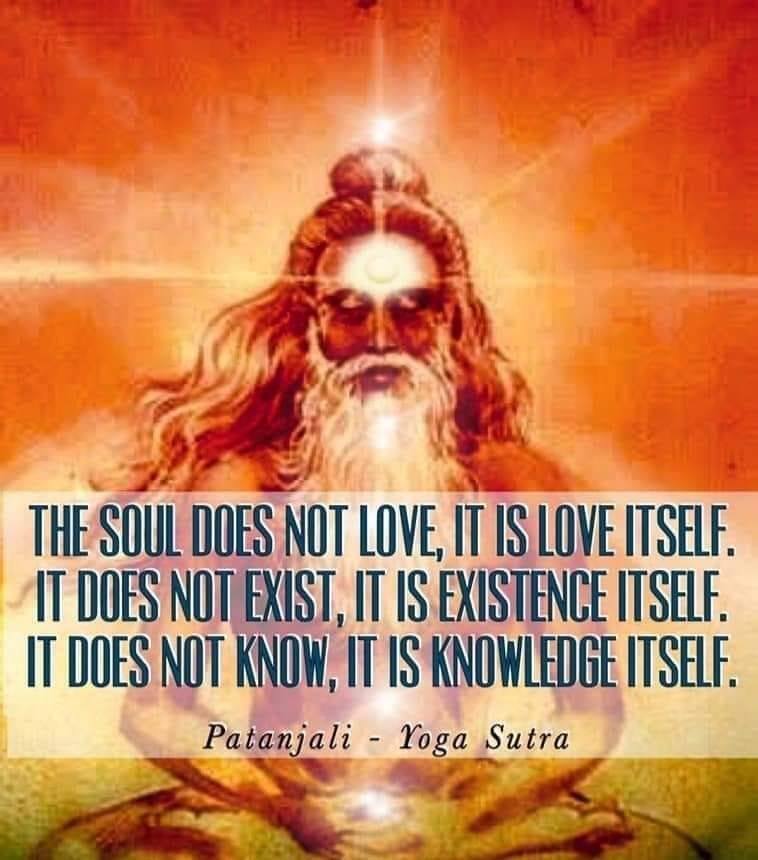
Prajnanam – wisdom is the Soul or Spirit. Prajnanam refers to the insightful Truth, which cannot be verified or tested outside the Self. It is a higher function of the intellect that ascertains the Satchitananda or being-consciousness-bliss, i.e., the Brahman, Atma, Self. A truly wise person is known as Prajna; one who has attained Brahmanhood itself; thus, testifying to the Vedic Mahavakya: Prajnanam iti Brahman. The knowledge of Brahman is neither insight nor intuition of Brahman but itself is Brahman
Sri Aurobindo presents a brilliant piece of writing through the clarity of his mind. Here is why. According to Sri Aurobindo: “True love is not the love of others but the love of our Self; for we cannot possibly love what is not our self. If we love what is not our self, it must be as a result of contact; but we cannot love by mere contact; because contact is temporary in its nature and in its results, and cannot give rise to a permanent feeling such as love. Yajnavalkya well said, “We desire the wife, not for the sake of the wife but for the sake of the Self.” Only if we mistake things for the Self, which are not the true Self, we shall, as a result, mistake things for love, which are not real love. If we mistake the food-husk for Self, we shall desire the wife for corporeal gratification; if we mistake the vital emotion-husk for Self we shall desire the wife for emotional gratification; if we mistake the mind husk for the self we shall desire the wife for aesthetic gratification and the pleasurable sense of her presence, her voice, looks etc about the house; if we mistake the intellect husk for the self, we shall desire the wife for her qualities and virtues, her capacities and mental gifts, for the gratification of the understanding. If we see the Self, in the bliss Sheath, where the element of error reaches the vanishing point, we shall then desire the wife for the gratification of the true Self, the bliss of the sense of Union, of becoming One. And if we have seen and understood our true Self without husk or covering, we shall not desire her at all, because we shall possess her, we shall know that she is already our Self and therefore not to be desired in her sheaths, since ‘She’ is already possessed. It follows that the more inward the sheath with which we confuse the Self, the purer the pleasure, the more exalted the conception of Good, until in the real naked Self we rise beyond good and evil because we have no longer any need of good or any temptation to evil. Emotional pleasure is higher than corporeal, aesthetic than emotional, intellectual than aesthetic, ethical than intellectual, spiritual than ethical. This is the whole truth and the whole philosophy of ethics; all else is practical arrangement and balancing of forces, economising of energies for the purposes of social stability or some other important but impermanent end.”🙏🕉✍️ Excerpts from “The Yoga of Death,” Year-Book 3. Dippack Mistri

Question: If the entire universe is of the form of mind, then does it not follow that the universe is an illusion?
Ramana Maharshi: There is no doubt whatsoever that the universe is the merest illusion. The principal purport of the Veda is to make known the true Brahman, after showing the apparent universe to be false. That the world is illusory, every one can directly know in the state of realization which is in the form of experience of one’s bliss-nature.
“Humanity places too much emphasis or prefers to place their faith on outsiders, rather than in the Spirit within the self, for outsiders who make available love, happiness, healing, knowledge, etc., are all a disguised form of idolatry and dichotomy. They do not realize the power within the Self through the realization of the essence of the Supreme within the Self.” 🕉🙏✍️ Excerpts from “The Yoga of Death,” Year-Book 3. Dippack Mistri
Nachiketas was right to reject the boon offered by the Lord of Death.
According to the testimony of Casius Clay or Mohammed Ali, if anything, to go by in this modernity. Ali had all the riches, surrounded by fame and fortune, he had more than anyone could wish for, however, neither religion nor his conversion into a different faith nor women nor progeny nor boxing gave him any satisfaction.
Say then, what did Elvis, Michael, Prince, and numerous others of the so-called ‘Hall of Fame’ find in the end? Dissatisfaction within their minds, which turned toward some form of ephemeral satisfaction from pharmaceuticals. Meditation injects psychotropic effect naturally. Foremost, humanity is all looking for happiness; a secure and a joyful life that is immutable, but mutability is the only thing that does not mutate, i.e., change is the only thing that does not change. Life’s joy is not to be found by externalization, it is found by internalization. 🕉🙏✍️ Excerpts from “The Yoga of Death,” Year-Book 3. Dippack Mistri
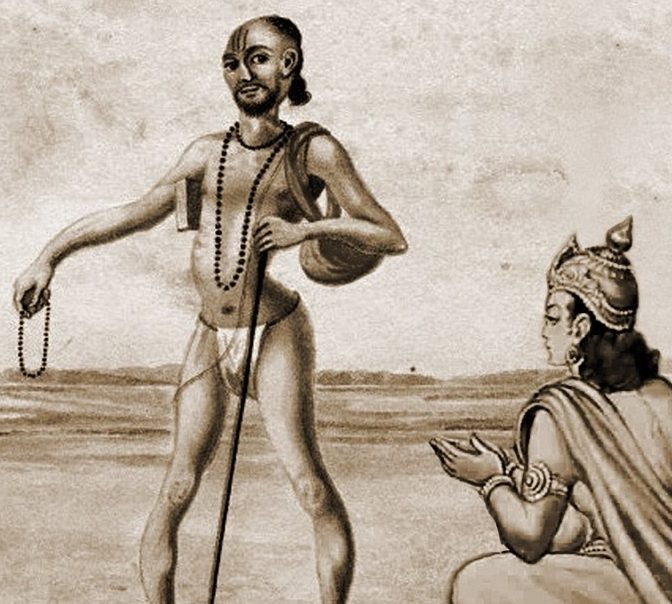
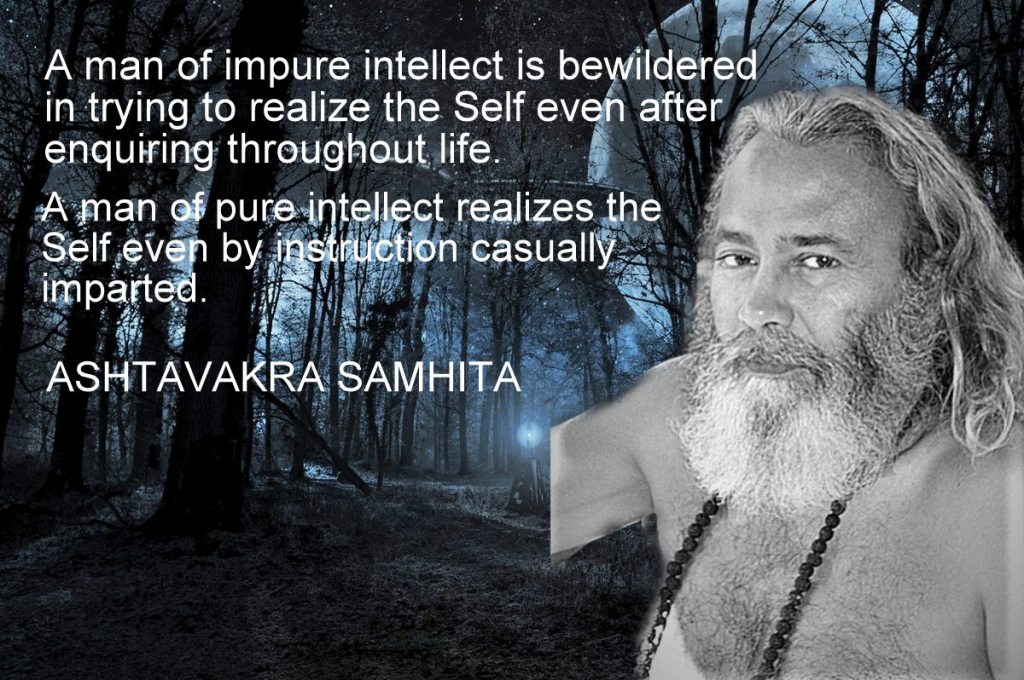
Lord Ashtavakra declares to King Janaka: “As cloth when analysed, is found to be nothing but thread, even so this universe, properly considered, is nothing but the One. Look upon the modifications of the elements as nothing in reality but the primary elements themselves. As the same all-pervading space, is both inside and outside ajar, even so the eternal all-pervading single Reality exists in all things.”
When a child is resting in his mother’s womb, he neither sees his mother nor cries for his mother, for he knows her comfort, for they are both present, yet they cannot see each other although they can tangibly feel each other. Likewise, God, the infinite Truth, can be tangibly felt deep within his being as Satchitananda. Therefore, if humanity rests in the womb of the Divine Intellect, although the Self and the divine Intellect do not perceive each other, the Intellect can witness all his actions. However, he can also come to the cognition of the Divine Light, Truth, and Love. 🕉🙏✍️ Excerpt from “The Yoga of Death,” Year-Book 3. Dippack Mistri
We do not share, we retain innate greed for more. As long as he has enough today to eat and has shelter, and any excess shared, tomorrow will look after itself as long as the unwanted visitor, death, does not ring his doorbell. A squirrel does not understand this. This is not entirely understood by mankind either and it is the cause of endless suffering and woe. It is the spiritual inquiry within that can end his suffering. Sage Siddhartha Gautama expended his energies in pursuit of knowledge that would put an end to his suffering and anxiety. The thinking mind, perverted and fouled, fools him to believe in the tomorrow and fools him to place value on objects. This again is an attribute of humanity, for it places value and anxiety foremost that drives them to obscenities of evil and crime. The four fountains of the brute mind are sex, food, sleep, and fear. Humanity retains the basic brute mind and instincts, and yet, he can also raise himself above animalistic propensities through the development of reasoning, discrimination, and understanding. 🕉🙏✍️ Dippack Mistri. Excerpt; “The Yoga of Death”; Turiya (Sleepless Sleep); Year Book 3
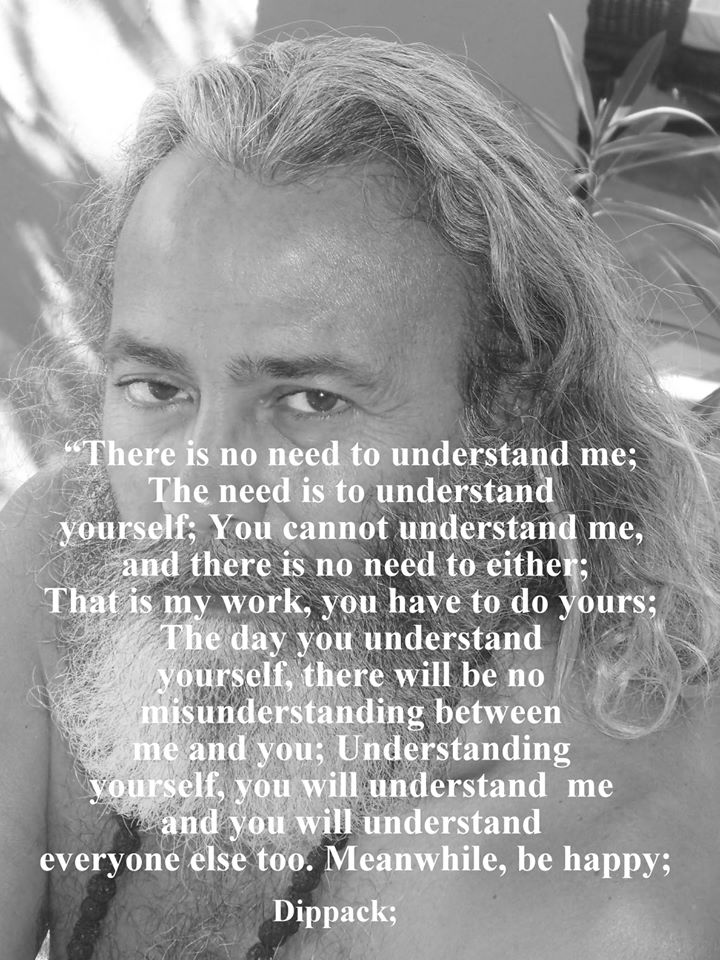
Contrary to popular belief amongst spiritualist, there is a distinct partition between the physical, mental, and the higher realms. There cannot be any intimacy between the physical-mental realm and the Spiritual realm; nay, he cannot associate an intimacy between God and demon, knowledge and ignorance, flower and fruit, milk and curd, oceanic abyss and waves; the former being the cause and the latter the effect; the former being restless and mortal, and the latte being tranquil and immortal. An unenlightened mind does not inherit the properties and attributes of the Soul, for this is the cause of darkness, Avidya, in humanity.
Wisdom or the inner light is like the legendary precious stone, O Rama, which bestows on its owner whatever he wishes to have. When one’s intelligence and understanding are properly guided by this inner light, one reaches the other shore of this world-illusion easily. One who does not have this wisdom, is overcome by obstacles and drowns in world-illusion. Lord Vasishtha.
Talk 99.
A sannyasi asked: It is said that the Self is beyond the mind and yet the realisation is with the mind. Mano na manute, Manasa na matam, and Manasaivedamaptavyam (The mind cannot think it. It cannot be thought of by the mind and the mind alone can realise it). How are these contradictions to be reconciled? Maharshi Ramana: Atman is realised with mruta manas (dead mind), i.e., mind devoid of thoughts and turned inward. Then the mind sees its own source and becomes That. It is not as the subject perceiving an object. When the room is dark a lamp is necessary to illumine and eyes to cognise objects. But when the sun is risen there is no need of a lamp, and the objects are seen; and to see the sun no lamp is necessary, it is enough that you turn your eyes towards the self-luminous sun. Similarly with the mind. To see the objects the reflected light of the mind is necessary. To see the Heart it is enough that the mind is turned towards it. Then the mind loses itself and the Heart shines forth.
As the Spirit is not entrapped in matter, so the Soul is not incarcerated in the body, and divinity is not asleep in the flesh. It is the embodied soul that is dreaming as embodied, entrapped, asleep, dreaming in ignorance, and confined within its own consciousness of the egocentric mind and its modifications.
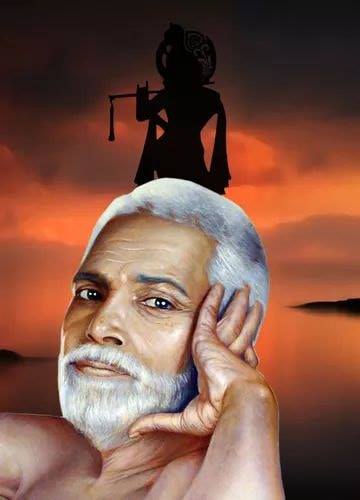
The fear of death drove my mind inwards and I said to myself mentally, ‘Now that death has come; what does it mean? What is it that is dying? Only this body dies.’ And at once I dramatised the occurrence of death. I held my breath and kept my lips tightly closed and said to myself, ‘This body is dead. It will be carried to the cremation ground and reduced to ashes. But with the death of this body am I dead? Is this body ‘I’? I am the spirit transcending the body. That means I am the deathless atma.’

It matters not whether one goes wandering around Arunachala or the world. It is the same as long as the ego is annihilated. Talks with Maharishi Ramana: Talk 252. D.: Sri Ramakrishna touched Vivekananda and the latter realised Bliss. Is it possible? M.: Sri Ramakrishna did not touch all for that purpose. He did not create Atma. He did not create Realisation. Vivekananda was ripe. He was anxious to realise. He must have completed the preliminary course in his past births. Such is possible for ripe persons only. D.: Can the same miracle be worked for all? M.: If they are fit. Fitness is the point. A strong man controls the weaker man. A strong mind controls the weaker mind. That was what happened in the case cited. The effect was only temporary. Why did Vivekananda not sit quiet? Why did he wander about after such a miracle? Because the effect was only temporary.
NOTE: Maharishi refrained from criticising anyone. He knew that there are all sorts of Gurus for all stages of spiritual aspirations. Siddhartha, Adi Shankaracharya, Yajnavalkya, Uddalaka, Ashtavakra, and many more were wandering sages. Although they wandered their minds were stationary. For they body movements were merely Upadhis seen by others and not in the Self. Can it be said in these instances that the “effect” was temporary? There is no “effect” nor a cause in the Self once the ego is annihilated. This is the whole point of Atma Vichara “Who am I.” I am neither cause nor effect!🙏🕉✍️
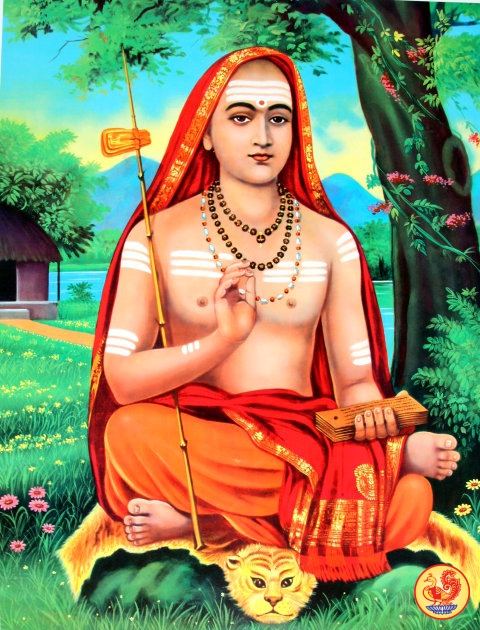
The fool thinks, “I am the body.”
The intelligent man thinks,
“I am an individual soul united with the body.”
But the wise man, in the greatness of his knowledge and spiritual discrimination, sees the Self as the only reality, and thinks, “I am Brahman.”
— Sri Shankaracharya
Vivekachudamani
Stay tuned
 DIPPACK MISTRI